Find Your Property

hamburger-background
retire in turkey as expat

Retiring In Turkey​

Your complete guide to retiring to Turkey as an expat

Retiring In Turkey Explained​

So, you’re thinking about possible retirement destinations. Internet searches seem to list the same old places year after year. But deeper research reveals that more and more people have discovered Turkey. And there is good reason for that!

If we examine the most important considerations for most retirees , you will understand why so many people have decided to retire in Turkey. From the strategic location and temperate climate, to the vibrant culture and simple routes to citizenship – there are many reasons why Turkey is the top choice for retirees.

At the same time, retiring to another country can seem like a daunting prospect. After all, you may not be familiar with the culture, language, administrative processes, routes to citizenship and more. Not to mention you’ll need help locating and buying a property in Turkey.

That’s where James & Aysegul – your expert relocation agents – can help you get set up and settled in a location of your dreams. Unlike other agents, they know the country and its processes inside out, and have helped many international retirees move to beautiful locations in Turkey. Read our guide and get in touch today.

Retiring In Turkey​

Retiring In Turkey​

Why Retire To Turkey?

There are many reasons to retire to Turkey, here are some of the highlights…

Accessible Residence Options

Affordable Real Estate

Low Property Taxes

Lower Cost Of Living

Affordable On Retirement Income

World-Class Medical Facilities

Affordable Health Insurance

Travel & Recreational Options

Retiring In Turkey FAQ & Guide

There are many reasons to retire in Turkey, but you no doubt have many questions. Find out more about the many benefits of retirement here – and contact James & Aysegul for more details.
Why Retire To Turkey As An Expat?

For retirees, obtaining a residency permit in Turkey is generally one of the easiest paths; it’s actually one of the most popular reasons foreigners move to Turkey long-term. Most retirees apply for a short-term residence permit. You can renew it every 1–2 years, and after 8 years of continuous legal stay, you may qualify for a long-term residence permit.

And Turkey’s Citizenship by Investment program is the most accommodating of its kind, arguably, in the entire world. To qualify for Turkish citizenship, purchase a property for at least 400,000 USD-equivalent and agree to hold it for at least three years. The main investor, their spouse, and children under 18 will all receive citizenship.

There is no residency or language requirement and no obligation to live in Turkey. Citizenship grants you a Turkish passport with visa-free or visa-on-arrival access to 110+ countries. For complete details about Turkey’s Citizenship by Investment program, contact James & Aysegul.

Retirees living on overseas pensions usually pay no income tax in Turkey. Turkey has valid Double Tax Treaties (DTTs) with 85 countries, allowing individuals and companies to avoid double-taxation on the same income.

There is no inheritance tax on overseas assets. There is no annual tax for retirees on their primary residence. And there is no capital gains tax on property held for 5 years or more! Let James & Aysegul put you in contact with a tax professional familiar with Turkey’s (and your home country’s) tax laws.

For most retirees, retirement income stretches much further in Turkey than in nearly all other popular destinations for American, British (and European) retirees. Turkey’s cost of living is 40–70% lower than Western Europe (and often 30–50% lower than Portugal or Spain).

Housing is substantially less expensive than in most of the U.S. and UK. And if you are a retiree owning only one residential property in Turkey, and it is your primary residence, you are fully exempt from paying annual property tax!

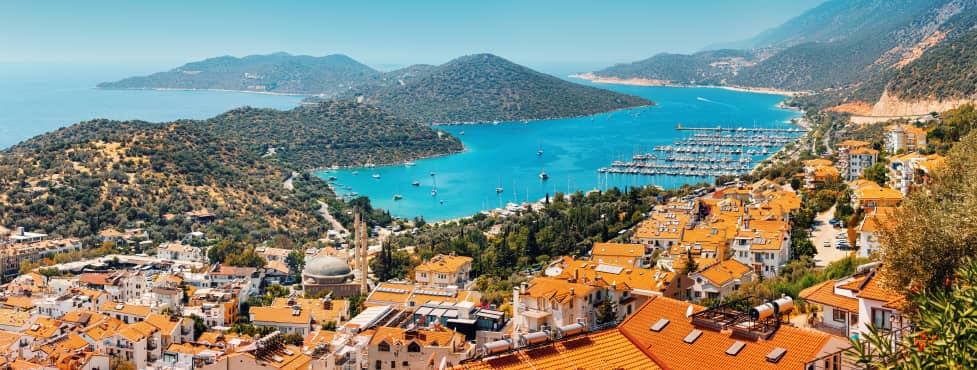
The Turkish Riviera (also known as the Turquoise Coast) receives 300 days of sunshine per year making it one of Europe’s best year-round sunshine destinations. Summer on the Turkish Riviera is hot, dry, and endlessly sunny, with gentle coastal breezes, and clear blue skies practically every day.

And, the short Mediterranean winters (December, January and February) are mild, bright, and green. You can comfortably sit outdoors most days.

Generally speaking, the following contribute to the truly wonderful quality of life that one can enjoy when retiring in Turkey.

Turkish people are warm, friendly and welcoming. Healthcare is excellent, easily accessible, and inexpensive. Beautiful landscapes, turquoise seas, pine-covered mountains, and fertile valleys combined with clean air and access to nature all contribute to a feeling of wellbeing. And of course the Mediterranean lifestyle – healthy diet and active outdoor lifestyle – leads to a low-stress pace of life, especially in Turkey’s smaller coastal towns.

Modern airports with direct flights to the US, UK and Europe year-round, reliable internet, modern highways and public transport, wide availability of Western goods and services provide modern convenience without losing Turkey’s unique charm.

Low violent crime rates, tight-knit communities where people look out for one another, and affordable private security and gated complexes for those who want extra peace of mind are reasons retirees often report feeling safer than they did in their home country.

Turkish property is often substantially cheaper than counterparts and equivalents elsewhere.

So, while the minimum property investment to gain citizenship is $400,000, this will get you a far better property in Turkey. For example, the average property price in London is £556,000 ($744,433), and this may only get you a small, 3-bedroom house in an undesirable area.

Meanwhile, the equivalent price could get you a spacious apartment in Istanbul – with the added benefits of lower living costs, gorgeous weather, exceptional views and a vibrant culture you can enjoy.

Medical facilities are often a key concern of retirees – from their accessibility to their cost. The good news is that this is substantially cheaper for US citizens, and is cheap for UK citizens too.

A recent, long-form study showed a high level of patient satisfaction in Turkey (80%) across all categories, such as physician quality, staff quality, sanitization and more.

While figures vary according to the individual (and their health conditions/plan), the insurance cost may be around $1,500 per year. Even accounting for some variation, this is quite affordable, and incredibly good for the care you get.

Citizens also have access to Turkey’s public healthcare system, which is excellent for most everyday needs. Private healthcare insurance is usually chosen to access a wider variety of medical services and the very best hospitals (with many English speaking staff).

Your options for travel during retirement are exceptional in Turkey.

You stand at the ‘crossroads’ of Europe and Asia. This means easy access to many European and Asian countries. Not only that, but there are many exceptional places to visit across Turkey itself, with thousands of beautiful beaches, idyllic towns and ancient, historic sites. You can often do this by whatever form of travel you desire, with many locations reachable by car, boat and plane.

Here’s just a few of the places you can easily visit from Turkey:

In Asia…

  • Lebanon (Beirut)
  • Jordan (Amman, Petra)
  • UAE (Dubai)
  • Egypt (Cairo)

In Europe…

  • Greece (Athens, islands) – extremely close, frequent ferries and flights
  • Italy (Milan, Rome)
  • Romania (Bucharest)
  • Balkans: Serbia, North Macedonia, Albania, Bosnia
  • Eastern Europe: Poland, Czech Republic, Hungary

With accessible, international airports, retirees in Turkey can travel internationally with ease, whether returning to their home country to visit relatives, or heading to Europe on holiday.

Retiring to Turkey FAQ

You are spoilt for choice. There are many excellent places to retire to in Turkey, depending upon your preferences. Some prefer quiet, seaside towns, while others seek a lively, centrally located city like Istanbul.

Take a look at some of our favourite areas for people to retire in Turkey…

  1. Bodrum – This Aegean coastal town offers a perfect combination of modern places to live and Mediterranean charm. With its upscale marina, excellent healthcare facilities, international community, and year-round mild climate, Bodrum appeals to retirees who prioritize life by the sea. The town also has good transport links, quality restaurants, and a celebrated culture (whilst being more relaxed than Istanbul).
  2. Yalikavak – Also located on Bodrum’s peninsula, Yalikavak has gradually been transformed into one of Turkey’s most exclusive retirement destinations. The prestigious Palmarina area attracts many expats, offering a slew of luxury properties, places to dine in style, and a slower pace of life than central Bodrum. It’s great for retirees who are keen to experience a slice of peaceful coastline with high-end facilities and proximity to the rest of Bodrum.
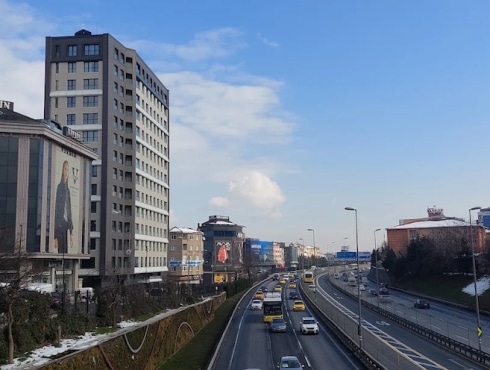
  3. Istanbul – Turkey’s largest, cosmopolitan city brings the urban energy that many people desire. Expect to dive into the world-famous culture, unparalleled history, and excellent infrastructure. Areas like Bebek, Beşiktaş, and the Asian side provide plenty of healthcare options and exceptional historical sites. The city lets you experience both European and Asian influences, though it’s busier and more expensive than coastal alternatives.
  4. Fethiye – This southwestern coastal town is popular with British retirees thanks to its stunning natural beauty, including the famous Blue Lagoon at Ölüdeniz. Fethiye offers an affordable cost of living, a well-established expat community, pleasant year-round weather, and easy access to beaches and mountains. Also, the town has good healthcare facilities and a relaxed Mediterranean atmosphere to enjoy.
  5. Antalya – Turkey’s tourism capital on the Mediterranean coast provides excellent value, modern infrastructure, and an international airport with direct flights across Europe. The city offers quality healthcare, diverse neighbourhoods from historic old town to modern beach resorts, and a large expat community. The climate is warm year-round, making it particularly appealing for those who prefer a warmer winter.

And, of course, these are just a few of the destinations which suit retirees in Turkey. There are many more besides (simply ask James & Aysegul, and we will be happy to help you find the best spot).

This depends upon several factors, but the ultimate answer is ‘not much’ – especially when compared to expensive cities in the UK, US and Europe where the cost of living is prohibitive for many people.

Data suggests that the average cost of living for a single person in Turkey is around £475 per month ($636, €542). That same data suggests that the average cost of living is 41% cheaper than living in the UK. Similarly, another cost of living index rates Turkey as approximately 60% cheaper than living in the US, when considering the day-to-day cost of living.

Another way to consider how much money you need to retire in Turkey is to match it to the minimum average salary (at least) – which is around €573 per month.

At the same time, if you want to obtain citizenship through investment, you can purchase a property in Turkey for $400,000 to make yourself eligible – so this is an upfront cost to consider.

When you account for the beautiful scenery, weather, and pace of life, it is clear that retiring to Turkey is an excellent option. Ultimately, you will have to weigh up the essential costs that are particular to your situation, such as healthcare, property, utilities and regular travel costs.

If you’re looking to retire in Turkey, the process is quite straightforward for many nationalities. Here, we lay out the main steps to follow as an aspiring expat who would like to reside in Turkey for an extended period of time.

  1. Check if Turkey fits your retirement goals – Before starting the whole process, make sure Turkey works for you in terms of cost of living, healthcare, climate & lifestyle and language. At this point, it’s important to note that there is no ‘retirement visa’ per se, rather, short and long-term residency gained in specific ways for any person.
  2. Enter Turkey legally – Most expats enter Turkey using Visa-free entry (very common, and lasting around 30–90 days), or an e-Visa (applied for online before travel). This lets you be physically present in Turkey to apply for residency from inside the country.
  3. Secure a place to live – You must have a legal address to apply for residency. To do this, you can rent an apartment or buy a property. Following that, you’ll need to have a notarised rental contract or property title deed (Tapu). This address will then be registered with local authorities.
  4. Obtain Turkish health insurance – Health insurance is mandatory for residency, and there are two ways you can choose to go about this. The first, and most common for retirees, is to get Private health insurance. You are also eligible to get public health insurance (SGK) after one year of legal residency.
  5. Prove financial self-sufficiency – Turkey requires proof that you can support yourself without working. In order to do this, you can provide pension statements, bank statements, investment income or other official documentation. While there’s no fixed income number publicly stated, but you must show regular, reasonable income that covers living costs.
  6. Apply for a Short-Term Residence Permit – This is an essential step for anyone moving to Turkey. To do this, you can apply online through the Turkish immigration system to acquire a Short-Term Residence Permit under (e.g.) ‘property owner’ – you will need basic documentation to do this, such as a valid passport.
  7. Attend your residency appointment – You’ll be given an appointment at the local immigration office (Göç İdaresi), in which you’re asked various simple questions and your documents are reviewed. Once approved, your residency card will be mailed to your address.
  8. Receive your residence permit – Initial, short-term residency permits are often granted for 6 months to 2 years and these must be renewed before they expire. If you choose to do so, you can stay in the country and simply renew these as you need to.
  9. Applying for & attaining citizenship – After getting your short-term residency certificate, you are also positioned to gain citizenship through a couple of different methods. You are able to get this after either 8 years of continuous residency, or much faster through making a specific investment in the economy (e.g. buying a property worth $400,000 or more).

Generally, retiring in Turkey will not affect your pension negatively and you can take it with you. There are a few things to consider if you are a UK or US citizen.

As a UK citizen

You can still receive your state pension if you move abroad, and claim it while living in Turkey. Even better, Turkey has a social security agreement with the UK, meaning that your pension will rise each year in line with the UK’s ‘triple-lock’ system. At the same time, you must have enough qualifying UK National Insurance years (usually 10 for any pension, 35 for full). Many private pensions also allow you to move abroad and still receive your pension.

As a US citizen

Similarly, you can generally receive your pension abroad as a US citizen, though you must report any taxable income to the IRS – for example, from SSA, 401(k) payments. The US taxes worldwide income, so will not be exempt from tax.

Generally speaking, you don’t need to speak Turkish in order to retire in Turkey, but it is helpful if you do!

This also depends on the city and area that you choose to relocate. Cosmopolitan, urban centres such as Istanbul will have many English speakers (and many services and facilities which use English, such as hospitals).

It is more a matter of preference, ease and comfort to learn the language. If you even learn basic phrases, this can help when you’re trying to buy something in a shop, renew important documents, or make new friends. We can happily advise you on the best areas to live, whether you speak some Turkish or not.

Buying property as a retiree is the same as buying a home as a working expat.

Many people use some of their retirement funding to get ‘citizenship by investment’, buying a property worth at least $400,000 and then submitting the relevant paperwork. Of course, you are not obliged to follow this route, but it is popular with many expats and retirees.

Other than that, you will need an experienced estate agent like James & Aysegul to help you purchase property legally, quickly and with minimum fuss.

Of course. There are a large number of US/UK expats living in Turkey, though certain regions attract more than others. Here are a few areas which are known for their expat communities:

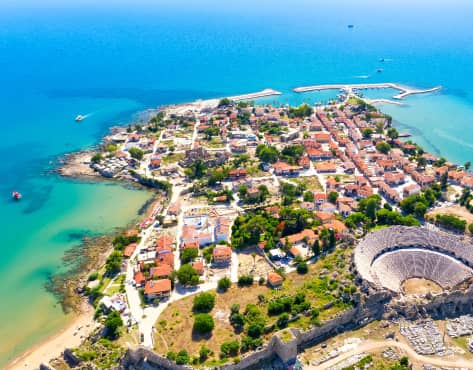
Antalya Coast – The largest concentration of British retirees, particularly around Alanya, Belek, and Side. These areas have established expat associations, English-speaking doctors, British-style pubs, and regular social clubs.

Fethiye and the Turquoise Coast – Popular with British and other European retirees, offering sailing clubs, walking groups, and a well-developed expat social calendar. The nearby villages of Ovacik, Hisaronu, and Calis Beach have particularly strong English-speaking communities.

Bodrum Peninsula – Bodrum attracts more affluent retirees, with yacht clubs, international schools, and sophisticated expat networks. Areas like Yalikavak, Gumbet, and Turgutreis have English-speaking residents’ associations.

Istanbul – While more cosmopolitan than retirement-focused, Istanbul has diverse international communities, particularly in areas like Besiktas, Kadikoy, and the Asian side, with numerous expat groups and English-language services.

Turkish inheritance laws are very fair, allowing you to pass on property and assets to those that matter. This is the case, for example, if you have bought a home in Turkey.

There are usually taxes to pay on inherited property, regardless of whether the person is a Turkish citizen or not. The tax is progressive, generally ranging from 1% to 10% depending on the value of the assets and the relationship between the deceased and the heir.

You will have to navigate these rules with care, and navigate these rules with an experienced tax advisor who understands both the inheritance laws in your home country and those in Turkey.

Retiring In Turkey​

Retiring In Turkey​

Properties For Sale

Sales Properties

For Sale Dora Vadi Kagithane property

Kagithane Istanbul Dora Vadi Apartments for Citizenship

$697,000

  • 3
  • 2
For Sale Pera Blue Plus Beyoglu property

Pera Blue Plus Beyoglu Modern Properties in Istanbul

$465,000

  • 4
  • 3
For Sale Zoom Residence Kagithane

Completed Zoom Residence Family Apartments in Kagithane

$345,000

  • 3
  • 2
For Sale Petek Residence Beyoglu Istanbul

Petek Residence Apartments Near Taksim Square Istanbul

$440,000

  • 3
  • 2
For Sale Piyalepasa Premium apartment Istanbul

Beyoğlu Piyalepaşa Istanbul Premium Investment Apartments

$500,000

  • 3
  • 2
For Sale Piyalepasa Premium apartment Istanbul

Completed Apartments at Piyalepaşa Istanbul Premium

$300,000

  • 2
  • 2
For Sale Piyalepasa Premium apartment Istanbul

Piyalepaşa Istanbul Premium Beyoğlu Property for Sale

$250,000

  • 1
  • 1
For Sale Imperium No1 Residence

Spacious Imperium No1 Family Homes in Kağıthane Istanbul

$500,000

  • 3
  • 2
For Sale Imperium No1 Residence

Airbnb-Friendly Investment Apartments in Kağıthane Istanbul

$370,000

  • 2
  • 2
View All Properties

Contact Us

For more information on buying real estate in Turkey, contact us today.

Blogs

Find out more about relocating to Turkey in our helpful guides – from how to invest in Turkish real estate, to settling in to the vibrant culture.

Bodrum | 11 Mins Read

Moving to Bodrum from America: Retirement & Relocation

Posted on 13th October 2026

Bodrum | 12 Mins Read

Moving to Bodrum with Turkey’s 20 Year Tax Exemption

Posted on 11th October 2026

Property News | 14 Mins Read

UK Private Pensions in Turkey and the 20-Year Tax Exemption

Posted on 11th October 2026

Contact Us

"*" indicates required fields

View our privacy policy regarding website enquiries.

WhatsApp