Looking to Buy Property or Obtain Turkish Citizenship?
Begin your journey with a free consultation.
Get the facts and figures to make informed decisions.

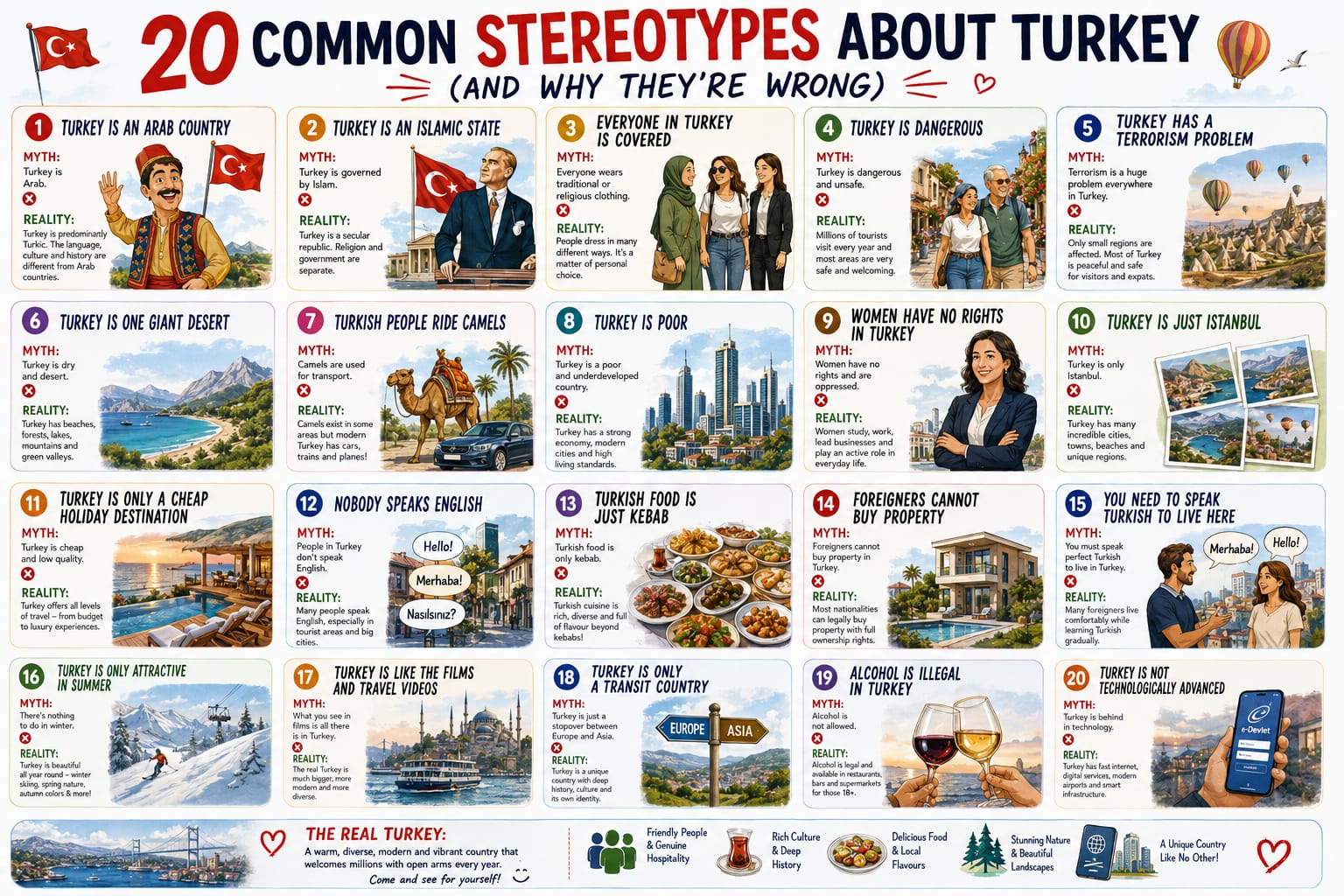
Turkey is one of the world’s most visited countries, welcoming millions of visitors every year. Yet despite its popularity, many misconceptions still exist. Some people assume Turkey is a desert. Others believe everyone wears religious clothing, that Turkey is an Islamic state, or that life here resembles what they have seen in films, television shows and YouTube travel videos.
The reality is often very different.
As a husband-and-wife team helping international buyers, investors and relocating families discover Turkey, we regularly hear the same questions from people who are considering visiting, investing or even moving here.
This article explores some of the most common stereotypes about Turkey and explains why many simply don’t reflect modern-day life.
One of the most common misconceptions is that Turkey is an Arab country. In reality, Turkey is not Arab. Turkish people are predominantly of Turkic origin and speak Turkish, a language completely different from Arabic.
Turkey’s culture has been shaped by influences from Central Asia, Anatolia, the Mediterranean, the Balkans and Europe. While Turkey shares some similarities with neighbouring countries, it has developed a unique identity of its own.

This is perhaps one of the biggest stereotypes that foreigners have about Turkey. Turkey is a secular republic founded in 1923 by Mustafa Kemal Atatürk. While the majority of Turkish citizens identify as Muslim, Turkey is not governed by religious law. Religion and government are separate, and people are free to practise religion, follow a different faith or choose not to follow a religion at all. Many visitors are surprised by how diverse Turkish society is.

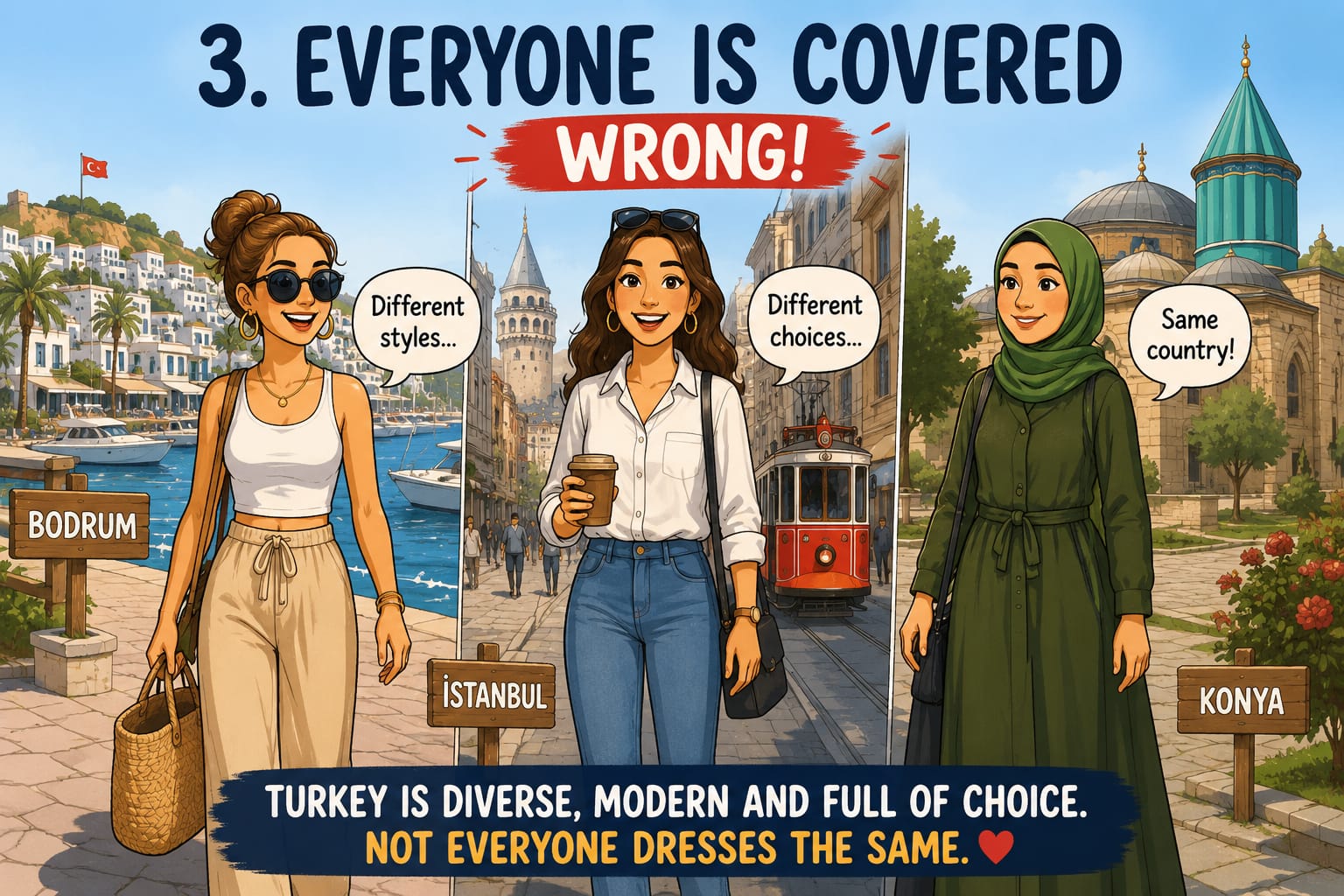
One of the biggest misunderstandings about Turkey is that everyone wears religious clothing or covers their face. The reality is far more diverse. Some women choose to wear a headscarf for religious, cultural or personal reasons, while many others do not.
In destinations such as Bodrum, Izmir, Antalya and much of Istanbul, visitors often find a lifestyle that feels very Mediterranean and international. Turkey is home to more than 85 million people and there is no single way Turkish people dress.
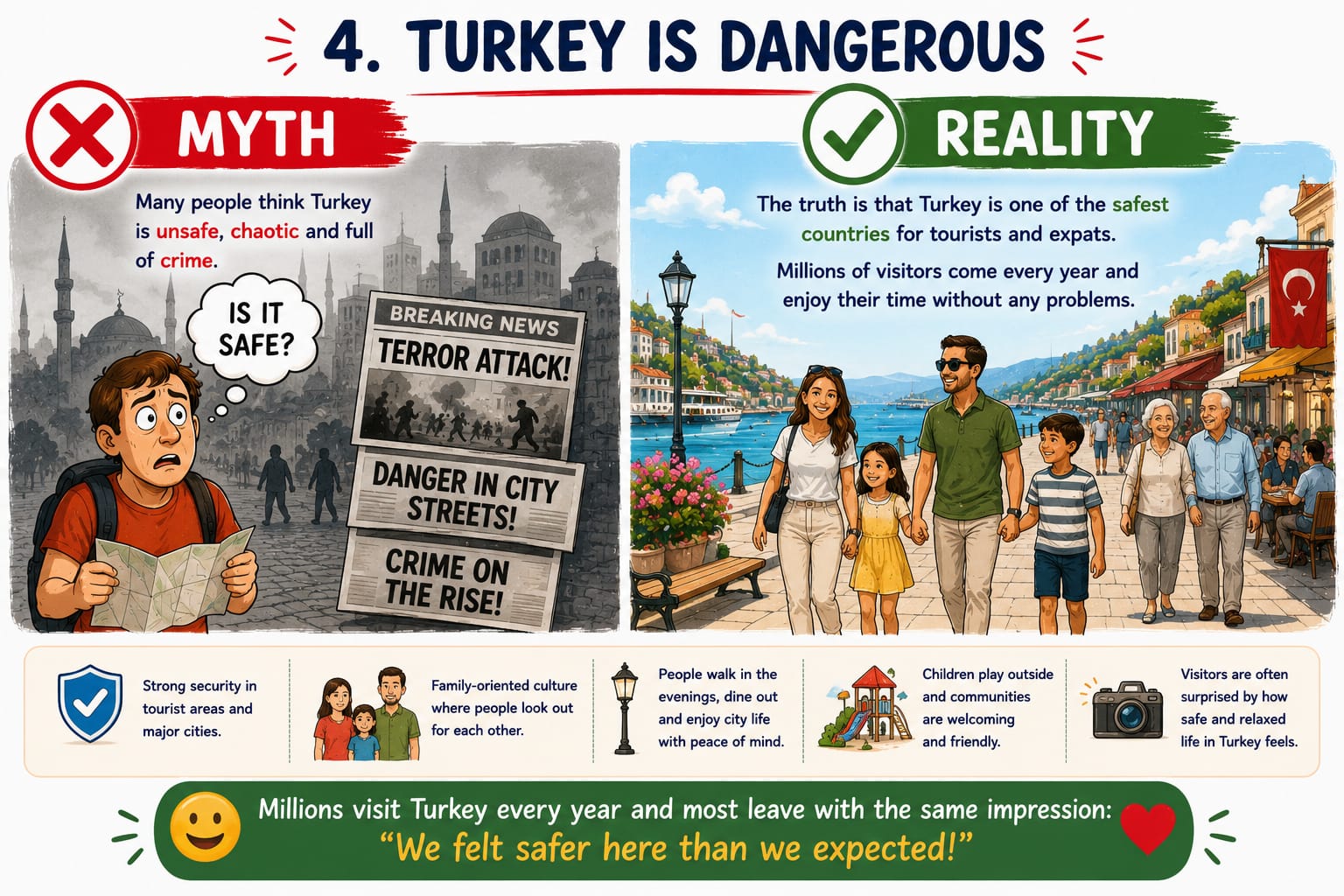
Many people who have never visited Turkey are surprised by how safe it feels. Like any country, sensible precautions should always be taken. However, millions of visitors travel to Turkey every year and enjoy a safe and enjoyable experience.
One thing many foreigners notice is the strong family culture. Children play outside, grandparents remain involved in daily life and communities often look after one another. Many visitors arrive expecting one thing and leave with a completely different impression.
International headlines can sometimes create a distorted perception of countries. Turkey is a large country spanning more than 780,000 square kilometres. Most areas visited by tourists, expats and property buyers are far removed from the regions that occasionally make international news. For most people, daily life consists of beaches, restaurants, schools, businesses, family gatherings and normal everyday routines.

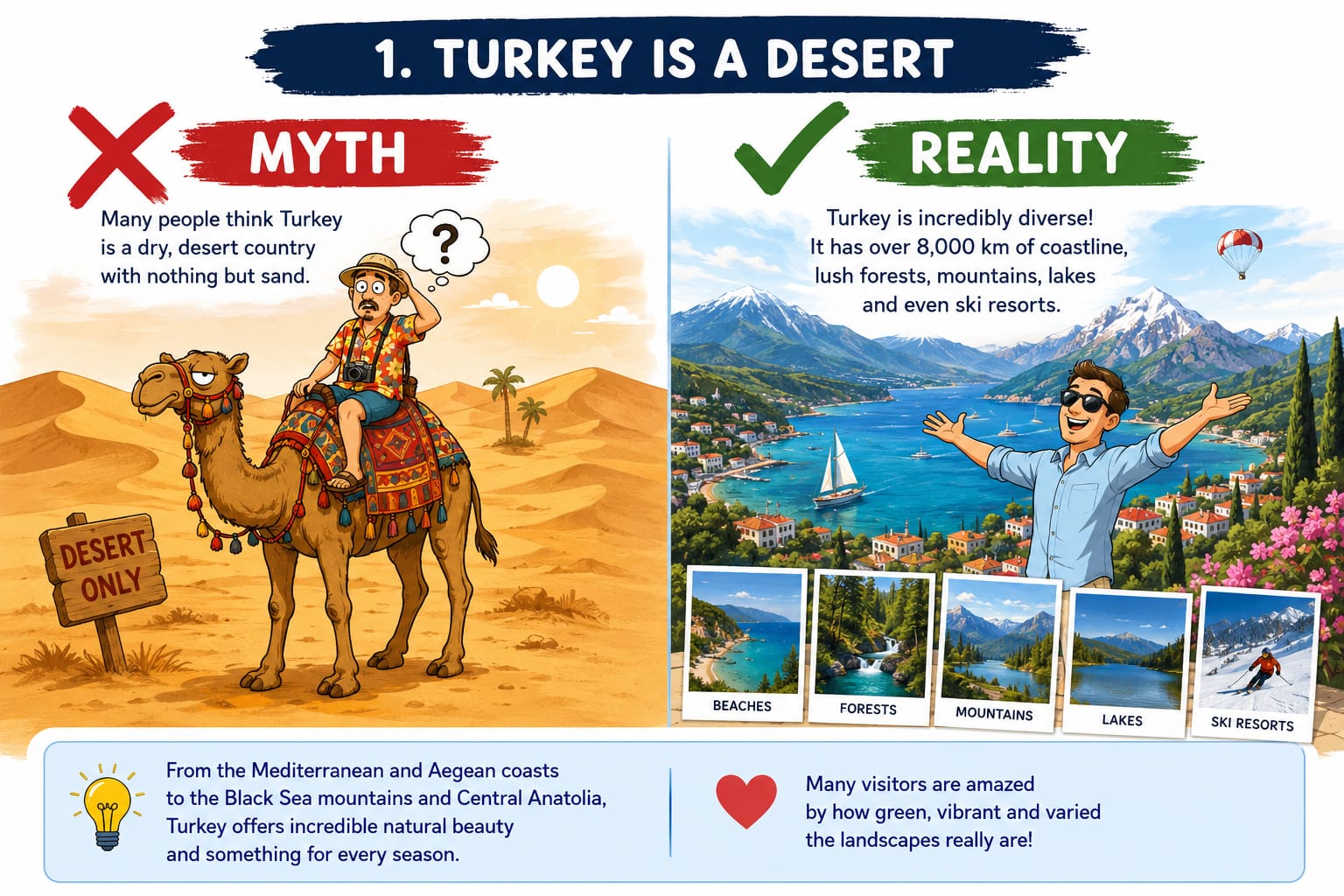
This myth couldn’t be further from reality. Turkey has more than 8,000 kilometres of coastline, beautiful forests, mountains, lakes, rivers and ski resorts. In a single day you can drive from pine forests to turquoise beaches and mountain villages. Many visitors arrive expecting dry landscapes and leave amazed by the country’s natural beauty.
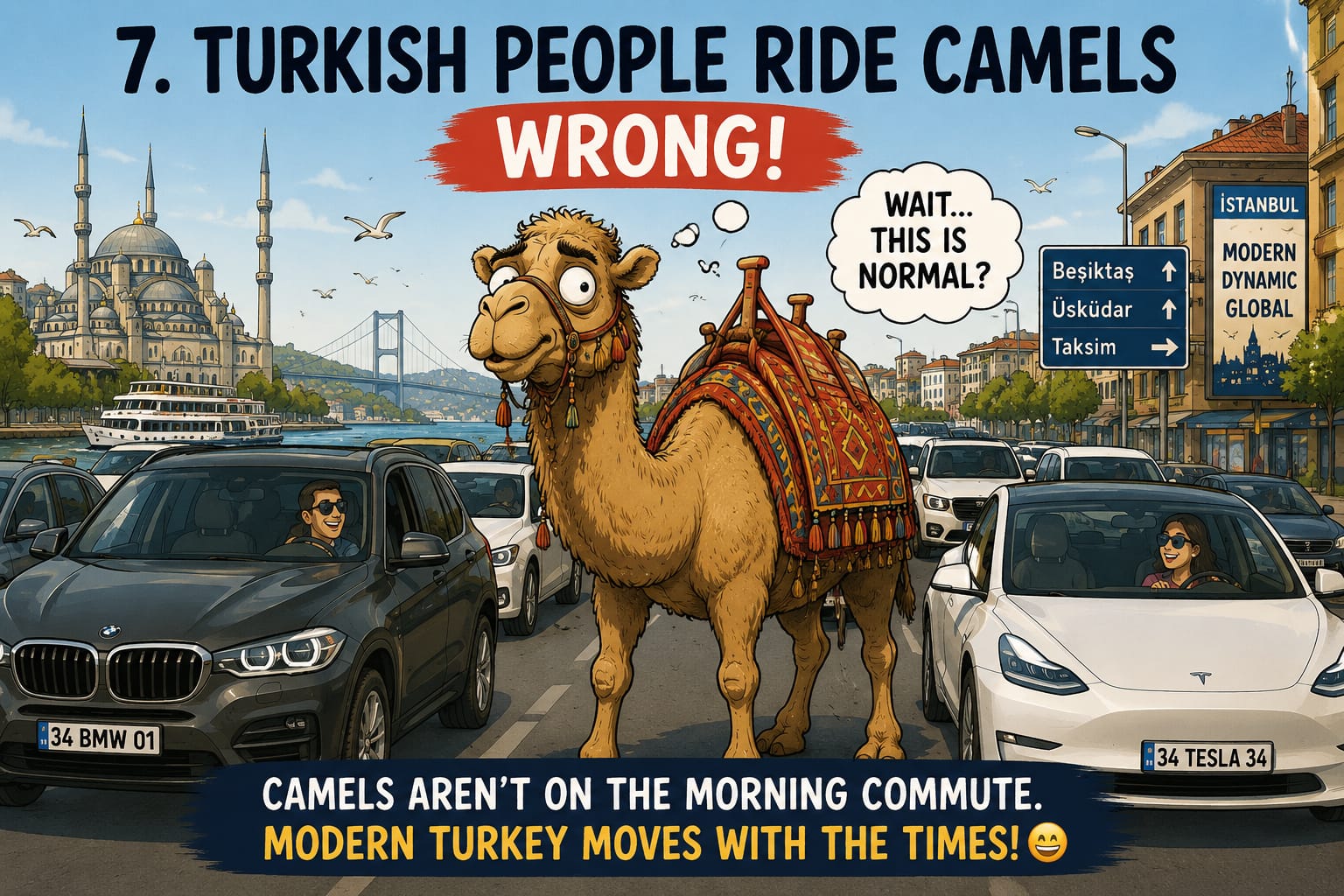
This one always makes us smile. While camels do exist in certain parts of Turkey and occasionally appear at traditional festivals, they are certainly not a normal form of transport. Modern Turkey has motorways, international airports, modern cities and growing electric vehicle adoption. You are much more likely to see a BMW, Tesla or Togg than a camel.
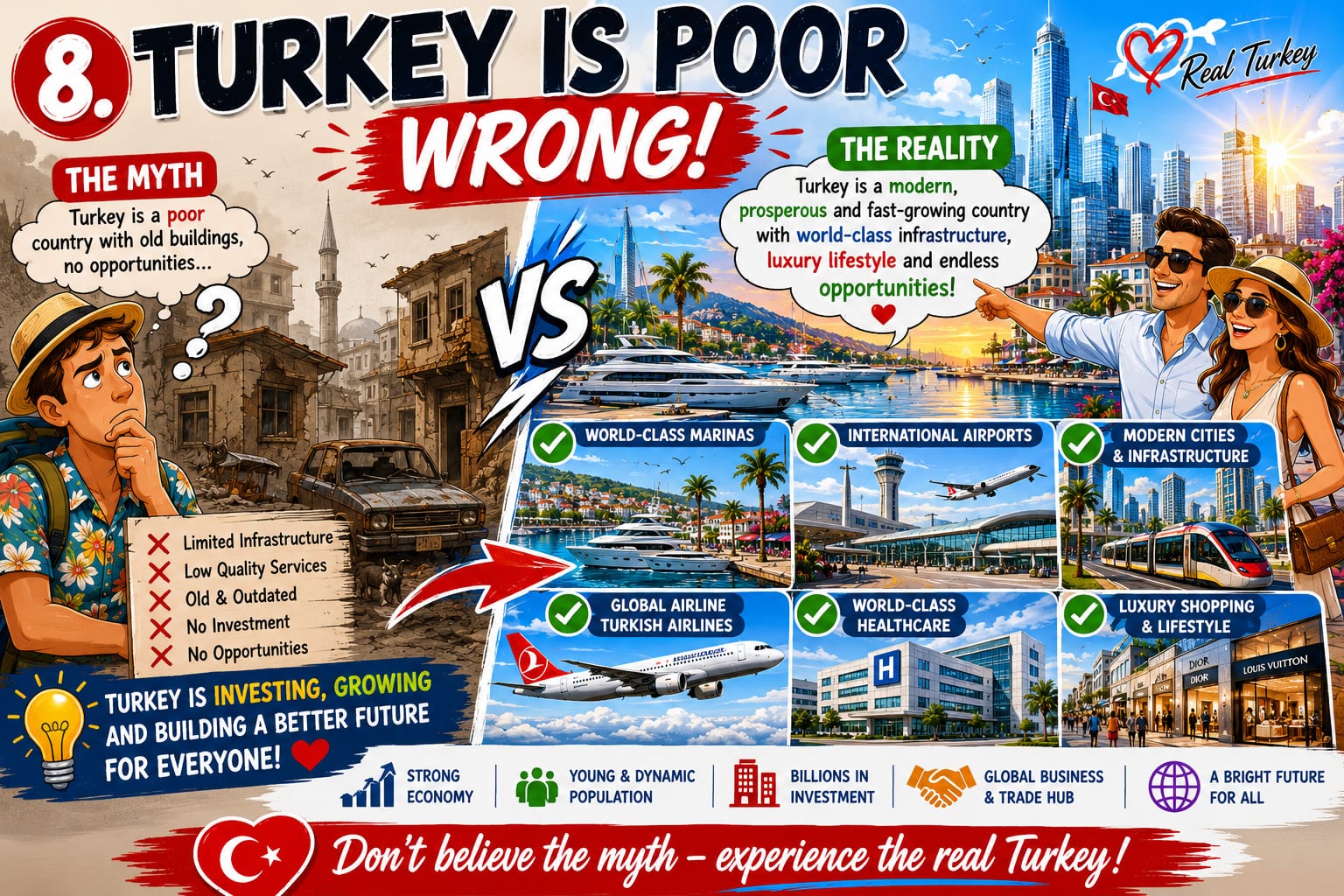
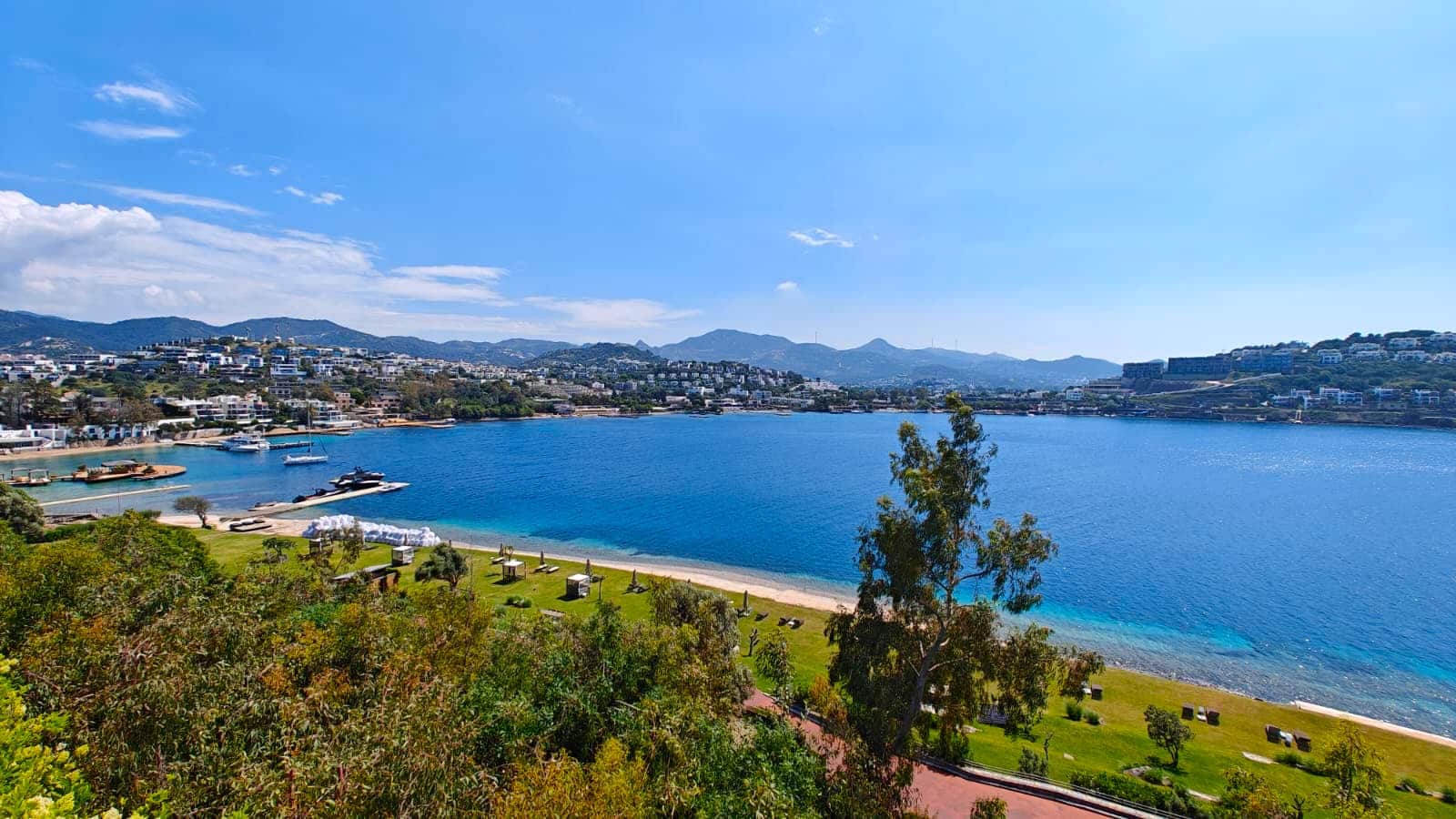
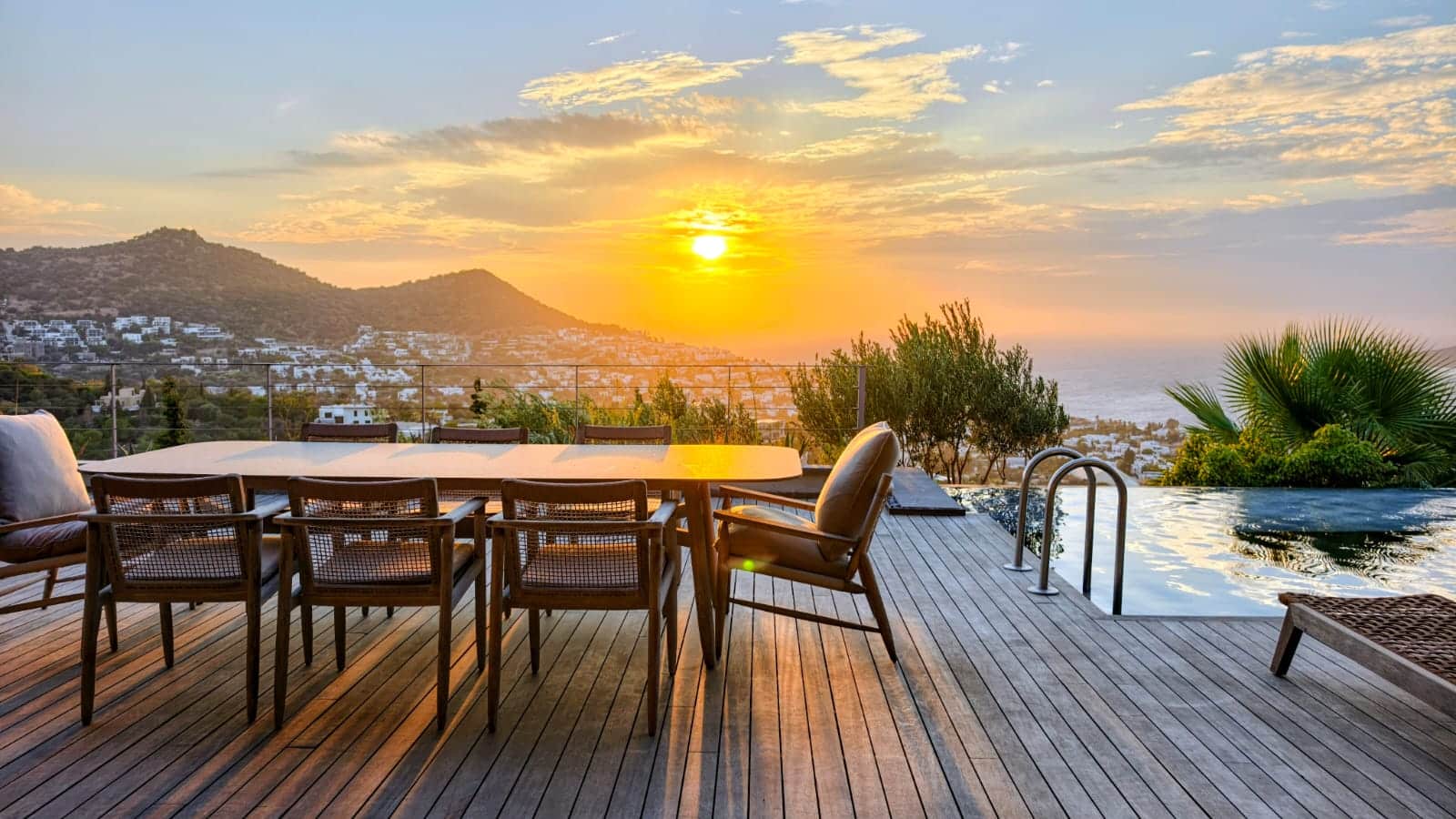
Turkey is a country of contrasts. What surprises many visitors is the quality of infrastructure, airports, roads, private healthcare facilities, marinas, shopping centres and modern housing developments. Luxury destinations such as Bodrum are home to some of the Mediterranean’s most exclusive villas, hotels and marinas.
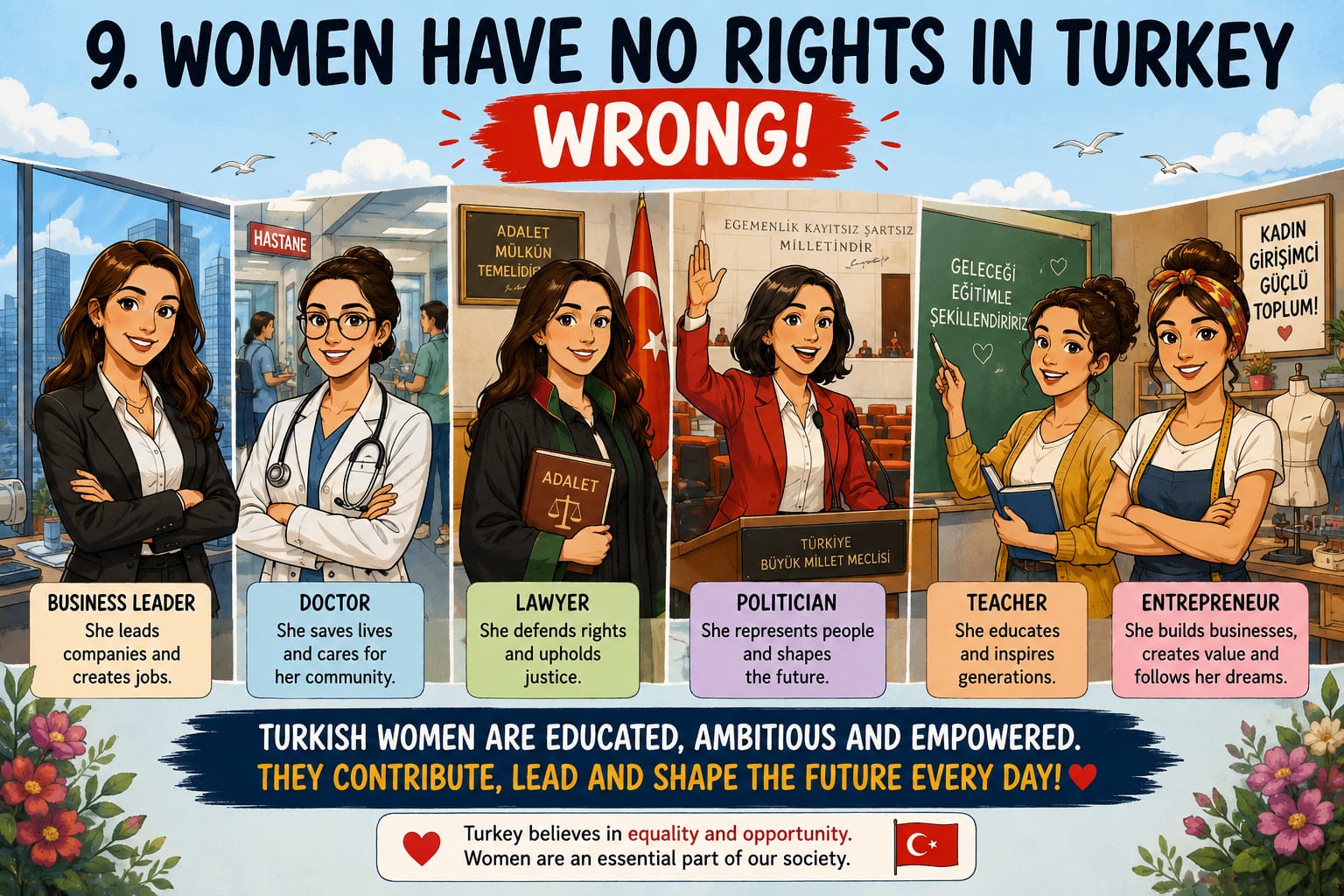
Women in Turkey work in business, medicine, law, politics, education and entrepreneurship. Women lead companies, run businesses and play an active role throughout society. Like every country, Turkey continues to evolve, but the Turkish stereotype that women are absent from public life is simply not accurate.
Istanbul is one of the world’s great cities, but Turkey is far more than Istanbul. The country offers: Bodrum, Izmir, Antalya, Fethiye, Cappadocia, The Black Sea region, Ancient cities and archaeological sites, and Ski resorts and mountain villages. Every region has its own identity, cuisine and atmosphere.

Turkey became famous for affordable holidays, but today it offers every level of lifestyle imaginable. Luxury villas, private marinas, designer boutiques, Michelin Guide restaurants and five-star hotels all sit alongside budget travel options. Places such as Bodrum have become international lifestyle destinations attracting homeowners, entrepreneurs and investors from around the world.

English levels vary by region, but in major tourist destinations and international areas it is widely spoken. Many foreigners live comfortably in Turkey while gradually learning Turkish over time. Hospitality, tourism, real estate and international business sectors typically have strong English-speaking staff.

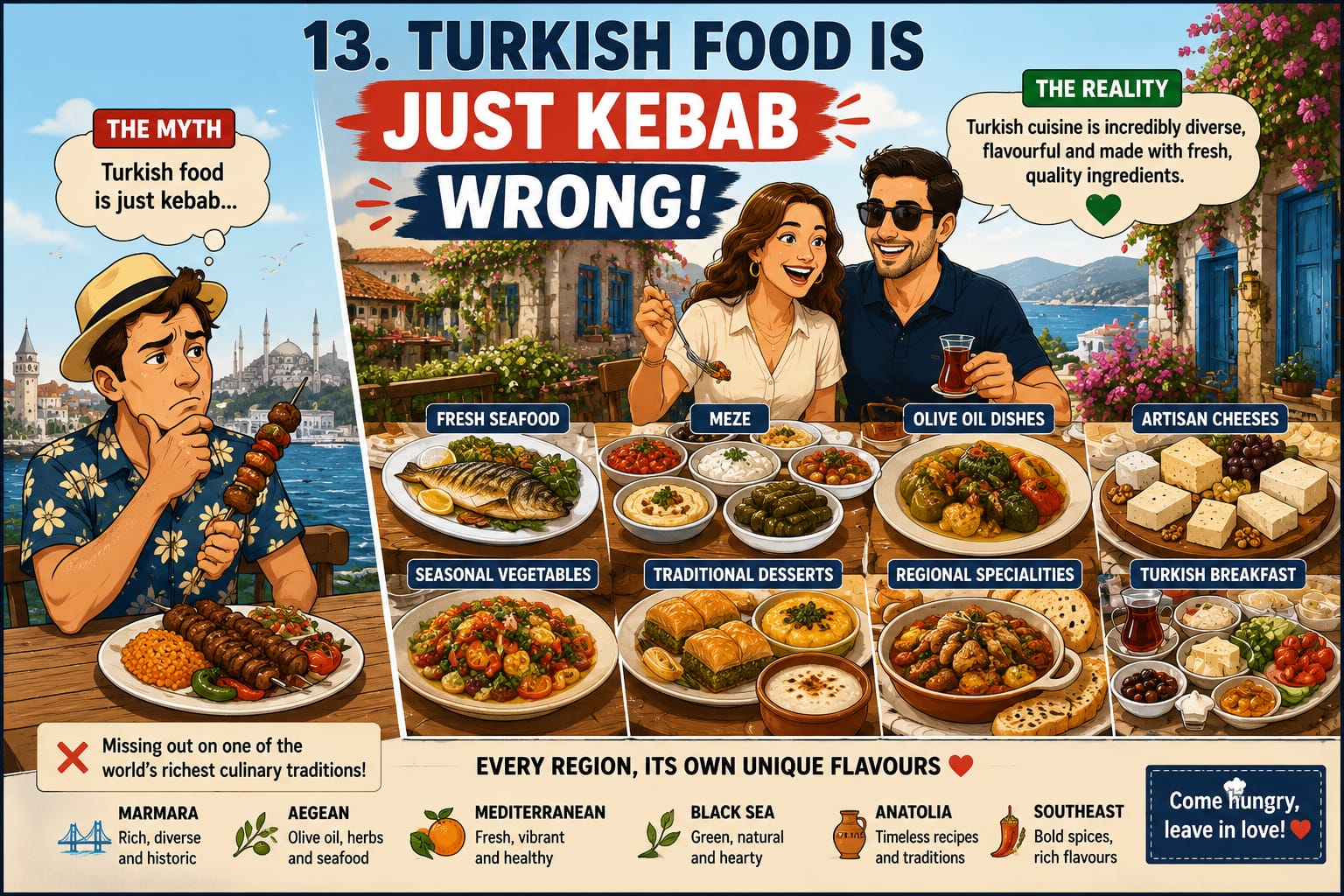
Kebabs are wonderful, but Turkish cuisine is one of the world’s richest culinary traditions. Turkey offers: fresh seafood, meze, olive oil dishes, artisan cheeses, seasonal vegetables, traditional desserts, and regional specialities. Every region has its own unique flavours.
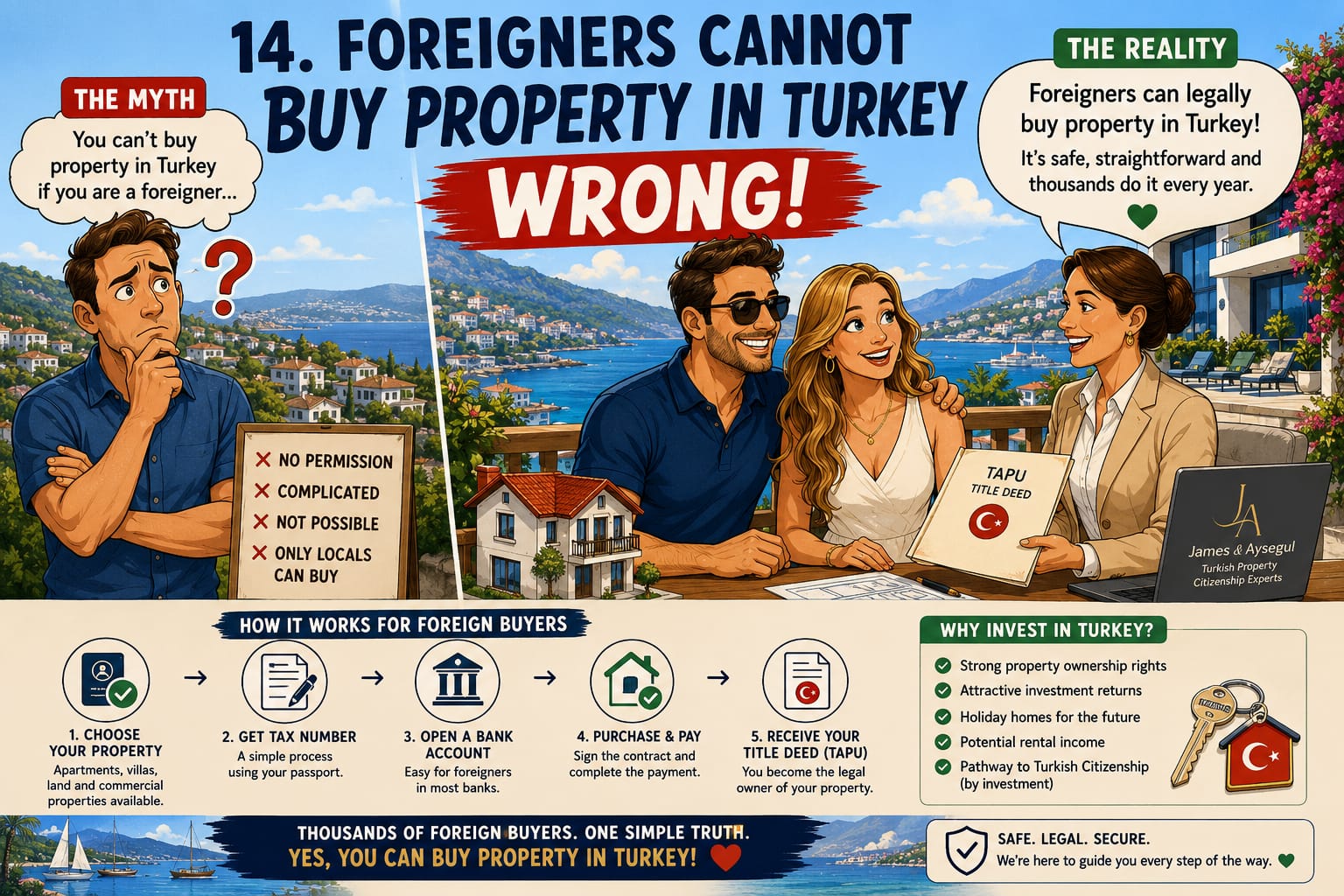
Foreigners have been buying Turkish property for decades. Most nationalities can legally purchase property and obtain full title deed ownership. Many international buyers purchase holiday homes, investment properties or permanent residences.
Learning Turkish is beneficial and appreciated. However, thousands of expats live comfortably in Turkey using English, particularly in Istanbul, Bodrum, Antalya and other international destinations.
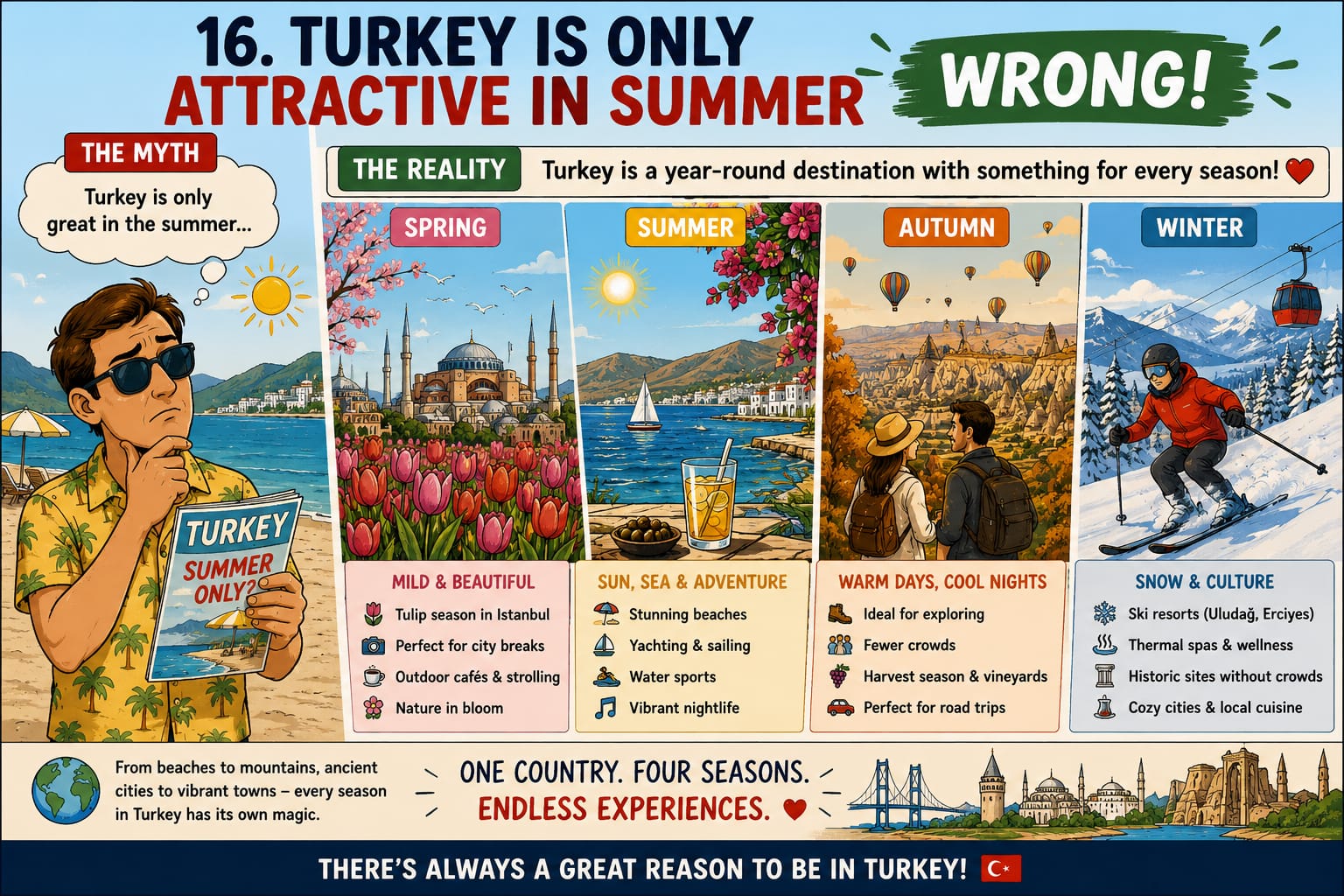
Turkey is a year-round destination. Visitors enjoy skiing, hiking, historical sites, vineyards, city breaks, sailing and outdoor activities throughout the year.
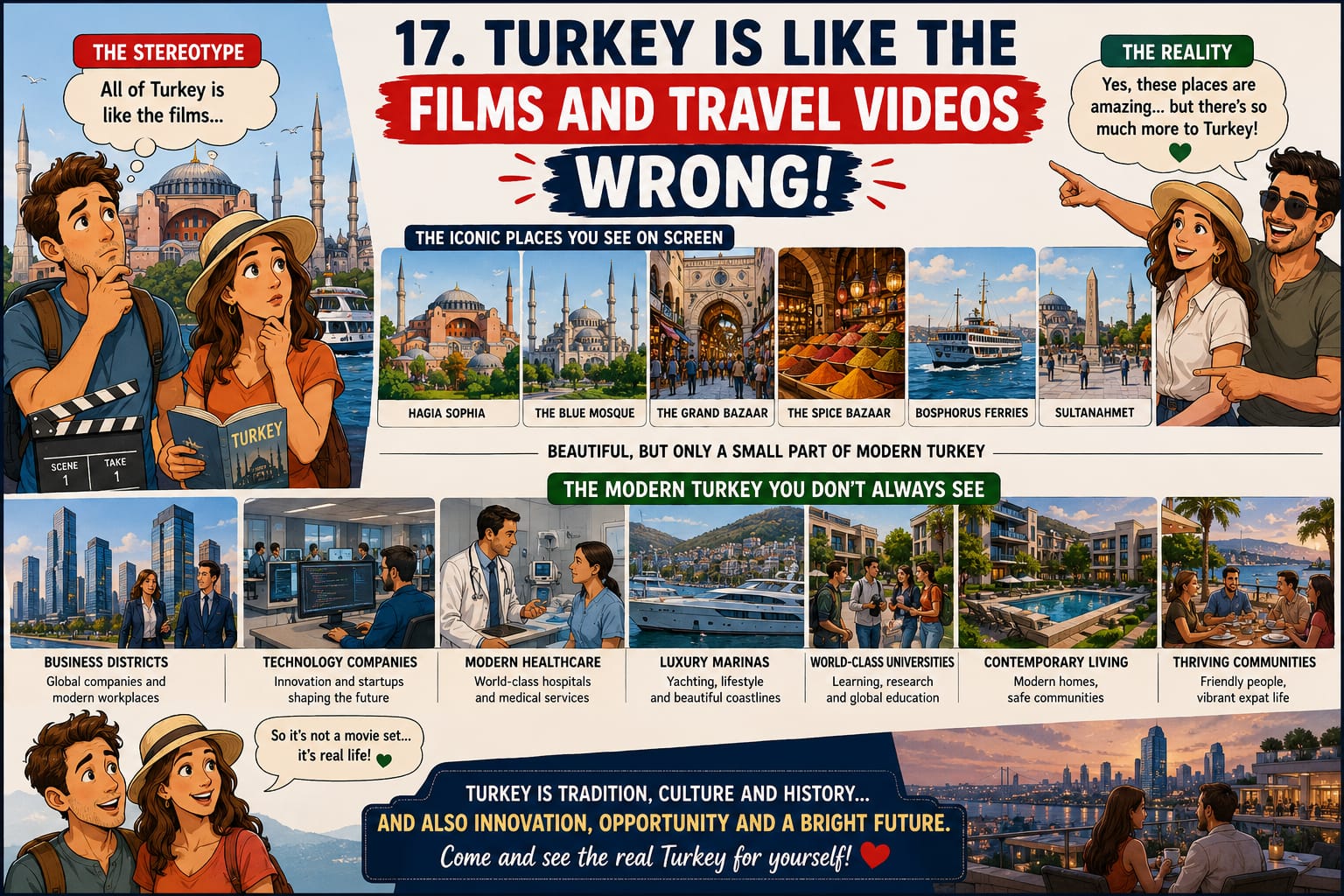
Many people’s image of Turkey comes from films, television and YouTube travel channels. Most show the same places: Hagia Sophia, The Blue Mosque, The Grand Bazaar, The Spice Bazaar, ferries crossing the Bosphorus, or Sultanahmet.
These places are beautiful. But they represent only a tiny part of modern Turkey. In many ways, it would be like visiting Rome, spending all your time around the Colosseum and assuming all Italians still live like ancient Romans.
Modern Turkey includes international business districts, technology companies, modern healthcare, luxury marinas, universities, contemporary housing developments and thriving communities. The Turkey you see on screen is real. It simply isn’t the whole story.
Turkey is diverse. Some areas are more traditional, while places such as Bodrum, Izmir, Istanbul and Antalya can feel very modern, Mediterranean and international. Visitors can enjoy beach clubs, fine dining, nightlife, shopping, art, cafés and relaxed coastal living. Like any country, culture varies by region, but Turkey is not one single lifestyle.

Many visitors are surprised by how modern Turkey feels. Major cities have international airports, private hospitals, digital banking, shopping malls, business districts, universities, modern residential developments and advanced transport links. Istanbul is a major global city, while Bodrum has become one of the Mediterranean’s leading luxury lifestyle destinations.

Moving to any new country takes adjustment, but many foreigners live comfortably in Turkey. In areas such as Bodrum, Istanbul, Antalya and Fethiye there are international communities, English-speaking professionals, private healthcare, international schools and services designed for foreign residents. Many people arrive for a holiday and later decide Turkey could become a long-term home.
Many visitors arrive with assumptions and stereotypes about Turkey. Then they discover something very different:

No. Turkey is a secular republic founded in 1923 by Mustafa Kemal Atatürk. While most Turkish citizens identify as Muslim, the country is governed by civil law rather than religious law. Religion and government are separate, and people are free to practise religion, follow different faiths or choose not to follow a religion at all.
No. Turkey is home to more than 85 million people with diverse lifestyles and personal choices. Some women choose to wear a headscarf, while many others do not. In cities such as Istanbul, Izmir and Bodrum, visitors often see a mix of modern fashion, business attire, casual clothing and traditional dress.
No. Wearing a headscarf is entirely a personal choice. There is no law requiring women to wear religious clothing in public.
Turkey is generally considered a safe destination for tourists, expats and families. Millions of visitors travel to Turkey every year, and many are pleasantly surprised by how safe everyday life feels.
Yes. Turkey has been one of the most popular overseas destinations for British travellers for decades. Many British visitors return year after year, and thousands own homes here.
Yes. Turkey has become increasingly popular with American visitors, investors and families seeking a second home or lifestyle change.
Only partly. Most films and travel channels focus on historic Istanbul, but modern Turkey is far larger, more diverse and more contemporary than many people expect.
Much of the world’s perception of Turkey comes from news headlines, films, television programmes and travel content that focuses on a small number of locations. Historic areas such as Sultanahmet, Hagia Sophia and the Grand Bazaar are iconic, but they represent only a small part of modern Turkey. Many visitors discover the reality is very different from what they expected.
Turkey spans both Europe and Asia. Istanbul is the only major city in the world located on two continents.
No. Turkey is predominantly Turkic, with its own language, culture and history.
English is widely spoken in many tourist destinations and international areas, particularly within hospitality, tourism and real estate sectors.
Yes. Alcohol is legal and widely available in restaurants, bars, hotels and licensed shops.
Yes. Turkey is home to people of many different faiths and backgrounds.
Yes. Most foreign nationalities can legally purchase property and obtain full title deed ownership.
Many foreigners choose Turkey because of its climate, lifestyle, healthcare and quality of life.
Yes. Istanbul in particular offers a wide range of excellent international schools teaching British, American and International Baccalaureate curriculums.
Many foreigners do, especially in Istanbul, Bodrum, Antalya and other international destinations.
Turkey offers a combination of climate, lifestyle, healthcare, food, culture, affordability and investment opportunities that many people find attractive.
Not anymore. Bodrum has evolved into a year-round lifestyle destination attracting entrepreneurs, retirees, investors and families.
Usually the same things: the hospitality, family culture, food, safety, natural beauty and quality of life.

Turkey is one of those countries that many people think they understand before they visit. Then they arrive. What they often discover is a country that is far more diverse, modern, welcoming and fascinating than they expected. The real Turkey is difficult to summarise in a headline, a news report or a social media clip. And perhaps that’s exactly why so many people fall in love with it once they experience it for themselves.
Begin your journey with a free consultation.
Get the facts and figures to make informed decisions.
Want to discuss something specific?
Contact us, and we will be happy to help


Randal is a regular contributor to James & Ayşegül’s website and the writer behind The Turkey Diaries. He and his wife moved
Relocating to Bodrum may offer qualifying new residents a way to combine life on Turkey’s Aegean coast with a 20-year Turkish income-tax

Could Turkey’s new 20-year foreign-income exemption apply to your UK private pension? There is a credible argument that it could. Combine...
