Looking to Buy Property or Obtain Turkish Citizenship?
Begin your journey with a free consultation.
Get the facts and figures to make informed decisions.

Stratonikeia is one of the most atmospheric ancient cities in southwest Turkey and one of the best cultural day trips from Bodrum. Located near Eskihisar village in the Yatağan district of Muğla, the site sits just off the Yatağan to Milas road, around 90 minutes from Bodrum by car.
For visitors staying in Bodrum, Yalıkavak, Gümüşlük, Türkbükü or nearby areas, Stratonikeia offers something completely different from the coast. Instead of beach clubs, marinas and summer crowds, this is a place of ancient streets, Roman monuments, Ottoman houses, quiet village lanes and countryside views.

Stratonikeia is located in Muğla Province, close to the modern town of Yatağan and the old village of Eskihisar. It sits inland from Bodrum, on the route between Milas and Muğla, making it a very realistic day trip from the Bodrum Peninsula.
From Bodrum, the journey is part of the experience. The drive takes you away from the coast and into a more rural side of Muğla, passing hills, pine-covered landscapes, villages and stretches of open countryside. It is a reminder that Bodrum is not only about the sea. Some of the region’s most impressive history sits slightly inland, away from the obvious tourist routes.
For visitors staying in central Bodrum, the journey usually takes around 90 minutes by car. From areas such as Yalıkavak, Gümüşlük or Türkbükü, the drive can be a little longer depending on traffic and route. It is still very manageable as a relaxed half-day or full-day outing.
Stratonikeia is an ancient city in the historical region of Caria. It is often described as one of the most important archaeological sites in this part of Turkey, but it remains far less visited than places such as Ephesus, Hierapolis or Aphrodisias.
The city is associated with Hellenistic and Roman history, but its story is much deeper than one era. What makes it so unusual is the continuation of life across different periods. Ancient structures, Byzantine traces, Ottoman buildings and Republican-era village houses all sit within the same landscape.
This is not a site where one period has completely replaced another. Instead, the layers remain side by side. You can walk along ancient paved streets, pass Roman ruins, look across to Ottoman stone houses, and feel the remains of village life still present in the setting. That is why Stratonikeia feels so different. It is not only an archaeological site. It is a historic landscape.

If there is one historic site that we find ourselves returning to again and again, it is Stratonikeia. In fact, it has become something of a tradition for us. Whenever friends, family members or clients come to stay with us in Bodrum and want to experience a different side of Turkey, Stratonikeia is often the first place we suggest.
And every single time, the reaction is the same. People leave amazed. Many have never heard of it before arriving, yet by the end of the day they are asking the same question: “How is this place not famous?”
The best way to describe Stratonikeia is as a smaller, quieter version of Ephesus. The difference is that instead of sharing the site with thousands of visitors, you can often spend long periods completely alone, walking among ancient streets, theatres, temples, Roman monuments, Ottoman buildings and traditional village houses in complete peace.
There is something very special about that experience. You are not simply looking at history behind barriers. You feel immersed within it.
One of the reasons we return at least once every year, sometimes twice, is because Stratonikeia is still actively being excavated. Every visit is different.
Over the past six or seven years we have watched the site transform before our eyes. Areas that were once little more than open ground have gradually revealed remarkable archaeological discoveries. Paths we used to walk across now contain restored structures, ancient walls and beautiful mosaics that have emerged from beneath the soil.
Each visit brings something new. It feels as though the city is slowly reintroducing itself to the modern world, one discovery at a time. The ongoing excavations mean that Stratonikeia is not a static museum. It is a living archaeological project where history is still being uncovered.

What makes Stratonikeia particularly unique is the way different periods of history coexist within the same landscape. Ancient Roman streets stand alongside Ottoman-era buildings. Traditional village homes sit among monumental archaeological remains. As you walk through the site, it genuinely feels as though you are moving through multiple chapters of history at the same time.
Combined with the surrounding countryside, mature trees and peaceful atmosphere, the entire experience has an almost timeless quality. There is a calmness here that is difficult to describe. Perhaps that is why we keep coming back.
Stratonikeia is best enjoyed slowly. It is not a place to rush through with a checklist. The real pleasure is in wandering, pausing, looking closely and allowing the different parts of the site to reveal themselves. Some of the highlights include:

Bodrum is known for beaches, boats, restaurants, nightlife, marinas and summer living, but the wider region has a much deeper cultural side. Stratonikeia is one of the best places to experience that. A day trip here gives visitors a chance to step away from the coast and see an older, slower, more rural part of the area. For families, it can also be an easy way to introduce children to history without the intensity of a packed tourist site.
For property owners or long-stay residents in Bodrum, Stratonikeia is also one of those places worth returning to. It is not a one-time attraction. Because excavation and restoration work continues, repeat visits often bring new discoveries. It is ideal for:
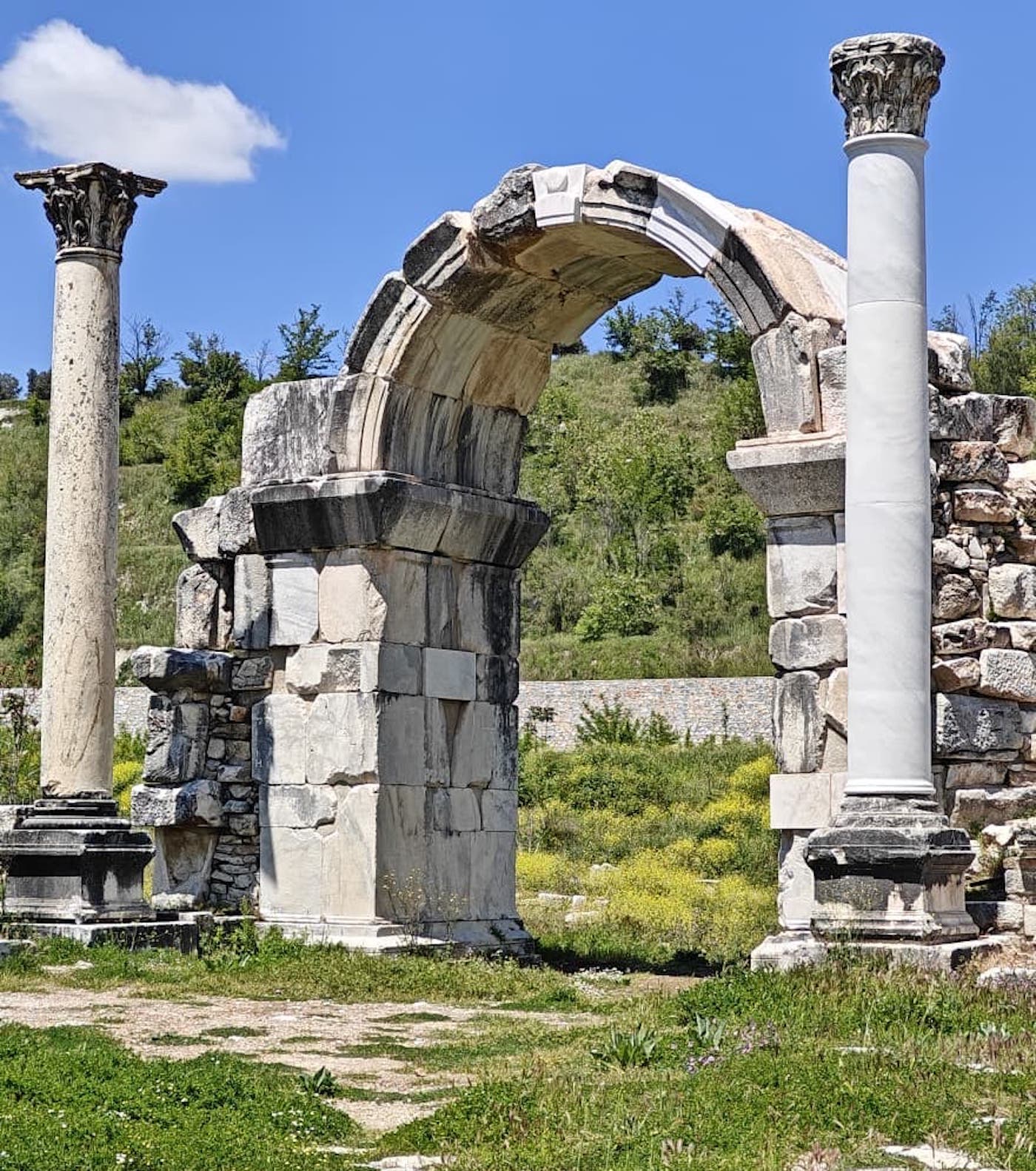
Stratonikeia can be visited throughout the year, but spring and autumn are especially pleasant. The weather is usually mild, the countryside looks beautiful, and walking around the site is more comfortable than in the peak heat of summer.
Summer visits are still possible, but it is best to arrive early in the morning or later in the afternoon. Much of the experience involves walking outdoors, so comfortable shoes, water and sun protection are useful.
Winter can also be lovely on clear days. The site is quieter, the light can be beautiful, and the lack of crowds makes the peaceful atmosphere even stronger. For anyone living in Bodrum year-round, it is a great off-season day trip.

Turkey is home to some of the world’s most famous archaeological sites, yet Stratonikeia remains surprisingly overlooked by international visitors. For us, that is part of its charm. It offers the scale, beauty and historical significance of a major ancient city without the crowds that often accompany more famous attractions.
At James & Aysegul, we often talk about Bodrum as more than a summer destination. For those who live here, buy property here or spend meaningful time in the region, Bodrum is also a gateway to culture, history, villages, food, nature and authentic local experiences.
Stratonikeia is a perfect example of that. It shows a side of the region that many short-term visitors miss, but long-term residents and property owners come to appreciate deeply. Whether you are visiting Bodrum for a holiday, exploring the area before buying a home, or already living here and looking for new places to discover, Stratonikeia is a day trip we always recommend.

Stratonikeia is located near Eskihisar village in the Yatağan district of Muğla, inland from Bodrum and close to the Yatağan to Milas road.
Stratonikeia is around 90 minutes from Bodrum by car, depending on where you are staying on the peninsula and the traffic on the day.
Yes. Stratonikeia is one of the best cultural day trips from Bodrum, especially for visitors who want history, countryside and a quieter experience away from the coast.
Stratonikeia has similarities with Ephesus because both are impressive ancient cities, but Stratonikeia is much quieter, less crowded and more peaceful.
Most visitors should allow 2 to 3 hours. History lovers, photographers and slow travellers may want longer, especially if combining it with nearby Lagina.
Yes. Families can enjoy Stratonikeia, especially if children like open spaces and exploring. Comfortable shoes, water and sun protection are recommended.
Spring and autumn are ideal because the weather is mild. In summer, it is best to visit early in the morning or later in the afternoon.
Begin your journey with a free consultation.
Get the facts and figures to make informed decisions.
Want to discuss something specific?
Contact us, and we will be happy to help


Randal is a regular contributor to James & Ayşegül’s website and the writer behind The Turkey Diaries. He and his wife moved
Relocating to Bodrum may offer qualifying new residents a way to combine life on Turkey’s Aegean coast with a 20-year Turkish income-tax

Could Turkey’s new 20-year foreign-income exemption apply to your UK private pension? There is a credible argument that it could. Combine...
