Looking to Buy Property or Obtain Turkish Citizenship?
Begin your journey with a free consultation.
Get the facts and figures to make informed decisions.

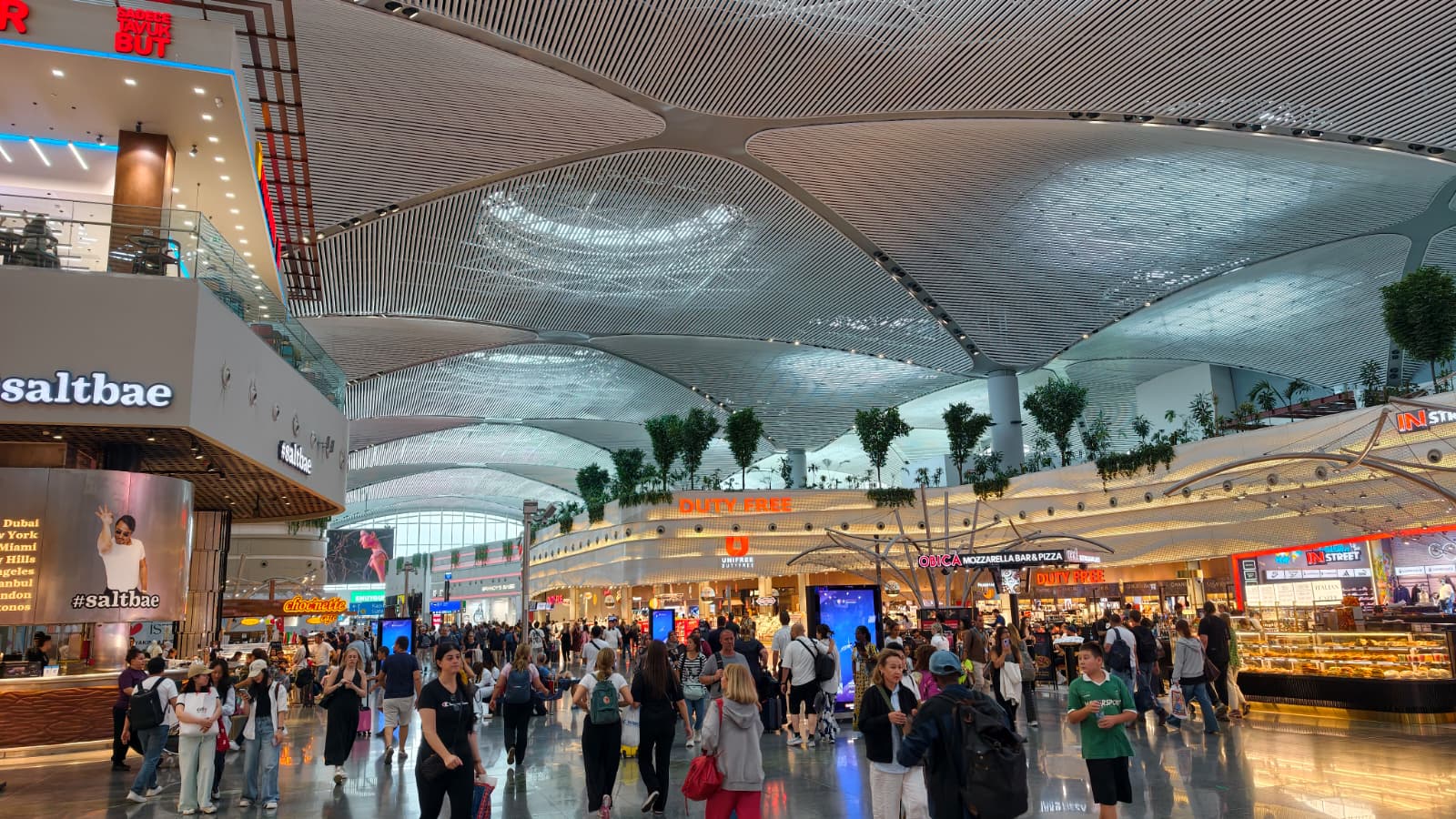
If you’re considering Türkiye for retirement, a second home, or simply a Plan B, there’s a practical question that deserves more attention than it usually gets: How easy will it be to get there, and how easy will it be to get anywhere else?
In Türkiye’s case, the answer is remarkably reassuring. Make Türkiye your home base and you’re not moving to the edge of the world. Increasingly, you’re moving to one of its best-connected crossroads.
Eight years ago, Istanbul Airport didn’t exist. Today, it is the best-connected international airport in the world.
That is a remarkable rise for an airport that only opened in 2018. But perhaps it shouldn’t be entirely surprising. Istanbul has spent the better part of two millennia making a business out of being in exactly the right place.
The latest confirmation comes from aviation data company OAG, whose 2026 Megahubs Index places iGA Istanbul Airport ahead of longtime global aviation heavyweights including London Heathrow and Amsterdam Schiphol.
For travelers, and particularly for anyone considering making Türkiye their home, that ranking translates into something very practical: Istanbul has become one of the easiest places on Earth from which to get almost anywhere else.
This isn’t simply a contest to see which airport can squeeze the most people through security.
OAG evaluates the number of international flight connections available at an airport in relation to the number of destinations it serves. Its 2026 ranking was calculated using flight schedules on August 2, the busiest day of the year.
Heathrow, for decades one of the world’s dominant international hubs, slipped behind it. Amsterdam Schiphol placed third, followed by Kuala Lumpur and Chicago O’Hare.
Istanbul Airport CEO Selahattin Bilgen says the ranking reflects the airport’s growing role as a global hub. It now serves approximately 350 destinations around the world, with further expansion planned.
And “further expansion” may be something of an understatement.
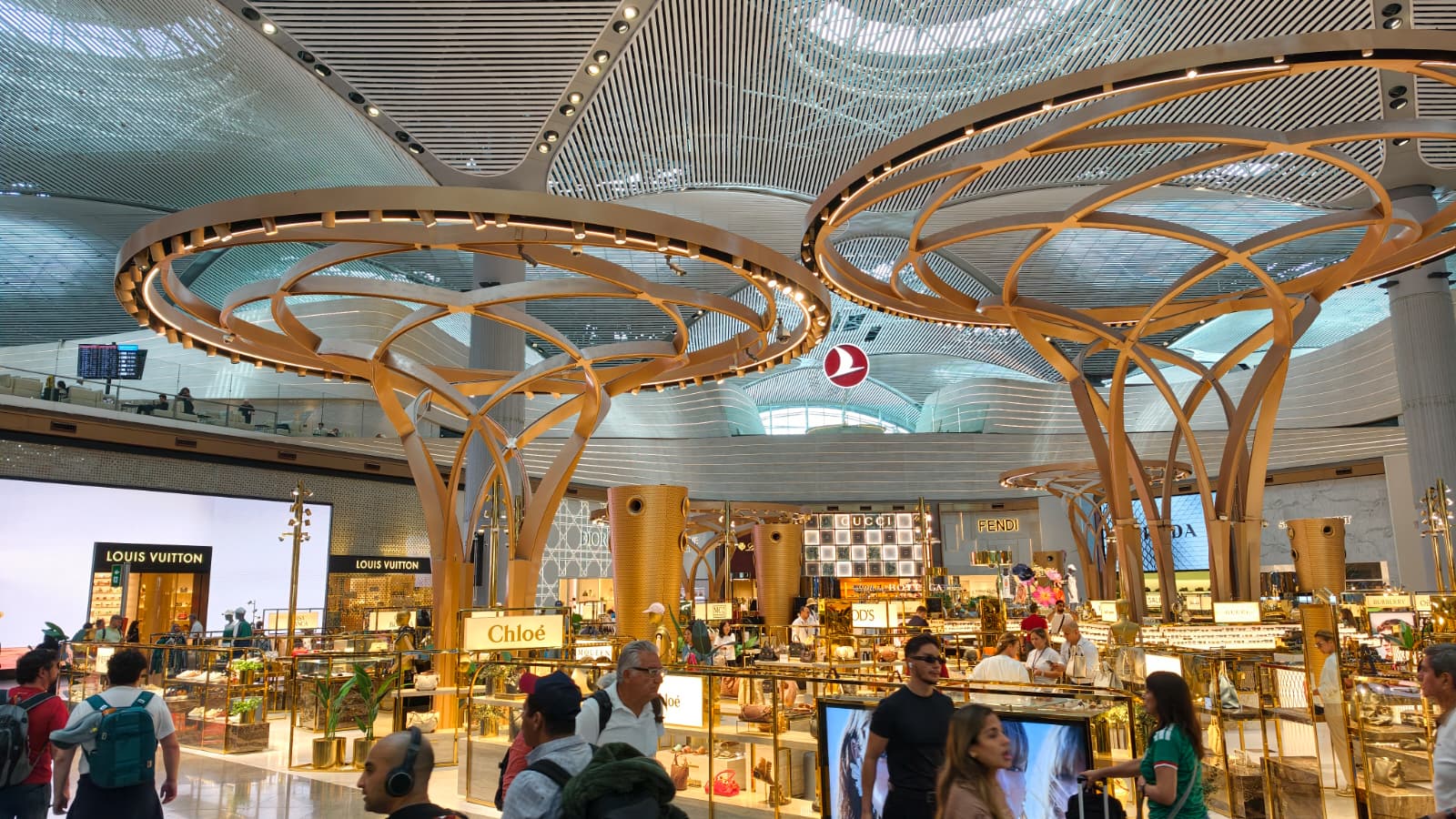
Anyone who has flown through Istanbul Airport knows that it is enormous. Anyone who has walked from one end of it to the other probably suspects it has its own climate.
The main terminal alone covers roughly 1.4 million square meters and is the world’s largest airport terminal beneath a single roof. The entire airport site occupies about 76.5 million square meters, larger than Manhattan.
More than 84 million passengers use the airport annually, placing it among the busiest airports in the world. Yet today’s traffic is nowhere near the airport’s eventual design capacity.
The long-term goal is to accommodate as many as 200 million passengers a year, roughly twice the annual passenger volume currently handled by Atlanta’s Hartsfield-Jackson, traditionally the world’s busiest airport.
That extraordinary amount of available capacity is one of the reasons aviation analyst John Grant of OAG believes Istanbul could be very difficult to dislodge from the top of the connectivity rankings.
Unlike many established European airports, Istanbul has something exceedingly valuable. Room.
Heathrow has been arguing about a third runway for what sometimes feels like slightly longer than commercial aviation has existed.
Its location amid the dense development of southeast England makes expansion politically and environmentally difficult. Amsterdam Schiphol faces its own restrictions, including a cap on annual aircraft movements.
Istanbul Airport was built under very different circumstances.
Located about 20 miles from central Istanbul on the European side of the city, it was designed from the beginning with large-scale expansion in mind. Its location also allows the airport to operate 24 hours a day.
The airport recently opened its fourth main runway, a 2,820-meter east-west strip intended in part to reduce taxiing and flight times for westbound aircraft.
Eventually, the airport is planned to have nine runways: six main runways and three reserves.
It is also licensed for three simultaneous independent runway operations, giving controllers considerably more flexibility during peak periods and allowing more aircraft to arrive and depart within the same window.
In other words, while some rival airports are wondering where they could possibly put another runway, Istanbul already knows where several of them are going.

Concrete and runways only get you so far.
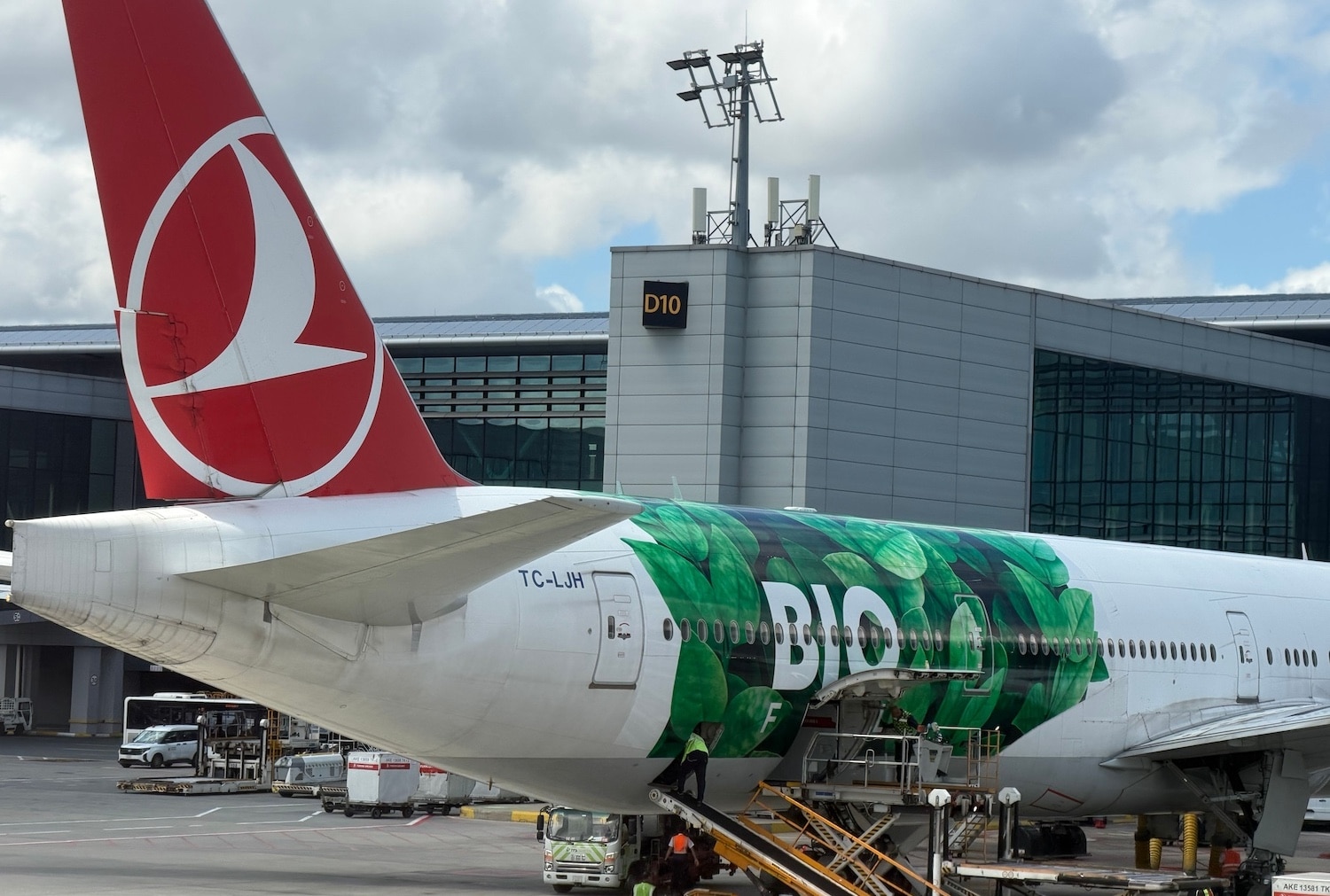
A major reason Istanbul Airport works so well as an international connecting hub is the extraordinary reach of Turkish Airlines, which accounts for roughly 80% of flights at the airport.
The airline now flies to 130 countries, more than any other airline in the world, a distinction recognized by Guinness World Records.
Its fleet has expanded beyond 500 Boeing and Airbus aircraft and includes both narrow-body jets serving regional destinations and wide-body aircraft flying long-haul routes.
The fleet is also relatively modern and continues to grow.
That matters economically. Newer aircraft generally burn less fuel, helping airlines control one of their largest operating expenses. Viktoriia Myroniuk, a senior lecturer in air transport management at Cranfield University in the UK, also notes that newer aircraft contribute to passengers’ overall impression of an airline.
Turkish Airlines has been investing heavily in both. Its combination of network, fleet, and service recently earned it another Skytrax award as Best Airline in Europe.
The airline and airport have therefore developed something of a virtuous circle: Turkish Airlines gives Istanbul Airport an enormous network of passengers and destinations, while Istanbul Airport gives Turkish Airlines the capacity to keep expanding.

Then there is the one competitive advantage no rival can reproduce: Istanbul is Istanbul.
Put a compass on the city and draw increasingly large circles around it. Within a relatively manageable flying distance are most of Europe, North Africa, the Middle East, Central Asia, and significant portions of Asia.
That makes Istanbul a natural transfer point between regions.
A passenger traveling from Europe to Central Asia can connect there. So can someone traveling between North America and the Middle East, or Africa and Europe, or dozens of other combinations.
The city sits at an aviation crossroads for much the same reason it once sat at the crossroads of ancient trade.
Recent geopolitical events have strengthened that position, at least temporarily.
OAG notes that the 2026 rankings have been influenced by disruption caused by conflicts in the Middle East and the continuing war between Russia and Ukraine. Some airlines have suspended routes and some competing hubs have lost connectivity.
Türkiye’s geographic position and diplomatic relationships have allowed Istanbul to maintain a particularly broad network through a turbulent period.
Circumstances can change, of course. But geography tends to be stubborn.

Turkish Airlines has also recognized something important about connecting passengers: if you’ve already brought millions of people to Istanbul, you might as well introduce them to Istanbul.
Its stopover program allows qualifying transit passengers to interrupt their journey and spend time in the city, with complimentary hotel accommodation available under the program.
It’s a clever idea.
Instead of experiencing Istanbul exclusively through an airport lounge and a duty-free shop, travelers can have dinner beside the Bosphorus, visit the historic center, sleep in a proper bed, and continue their journey the following day.
Myroniuk points to the program as an attractive alternative for passengers who dislike very long connecting journeys or simply can’t sleep comfortably aboard aircraft.
It also turns the airline’s hub into a tourism marketing tool. Someone who never considered Türkiye as a destination might arrive merely because Istanbul offered the most convenient connection and leave thinking, We need to come back.
For a country that wants to attract international visitors, that’s not a bad side effect of running an airline.
There are plenty of challengers. Chinese airlines are expanding internationally again, which Grant expects will strengthen the position of China’s major airports over the next several years. Middle Eastern hubs could also regain ground as suspended international services return.
But many of Europe’s great airports face structural limitations that Istanbul doesn’t. Heathrow, Schiphol, and other mature hubs are surrounded by cities and constrained by environmental rules, political opposition, or limits on aircraft movements. Their problem isn’t necessarily attracting more passengers.
It’s finding somewhere to put them. Istanbul Airport, by contrast, was designed for a future considerably larger than its present.
Grant believes that, assuming no major change in circumstances, Istanbul is well positioned to retain its connectivity crown into 2027 and potentially beyond.

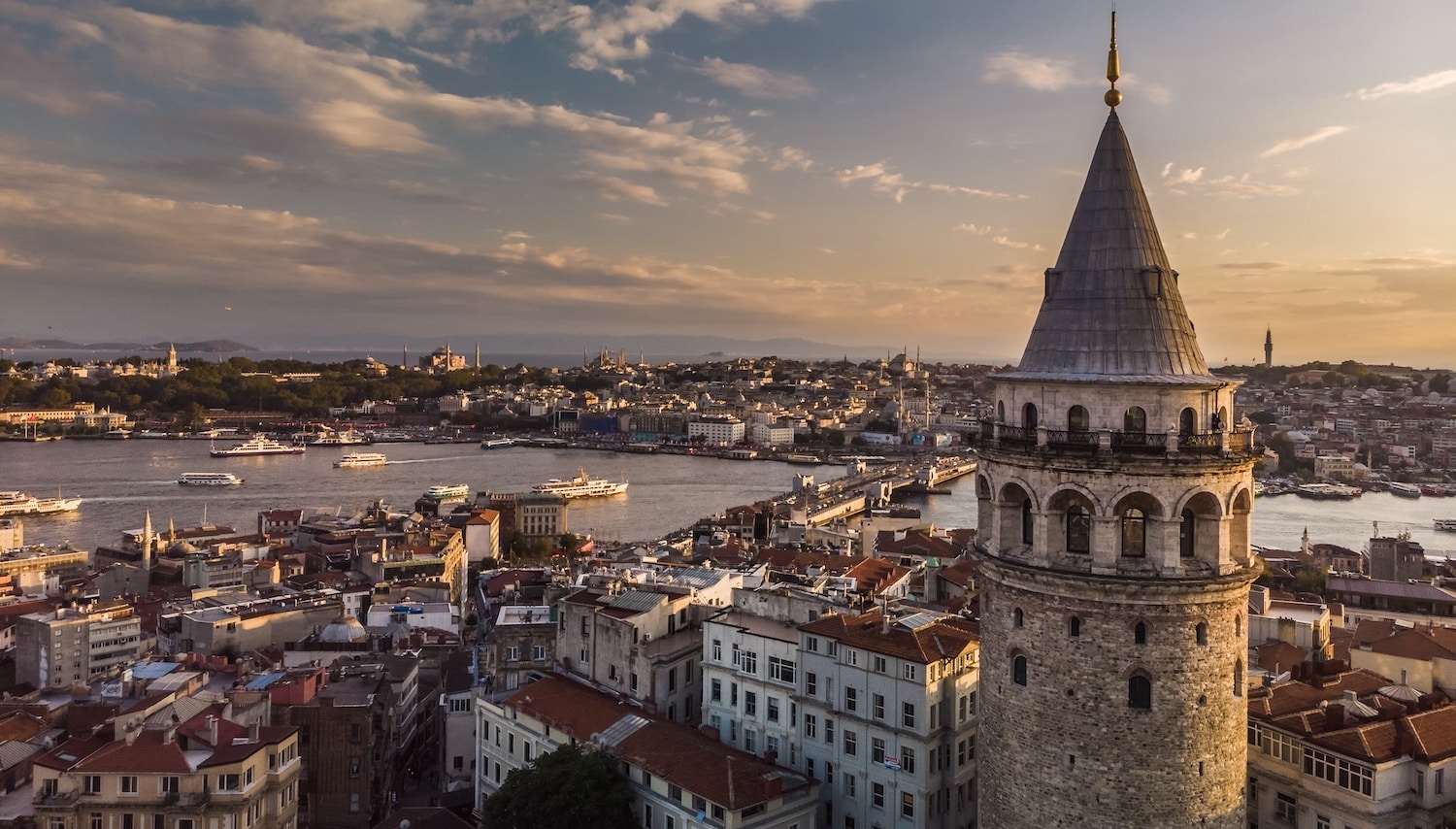
Perhaps the most interesting thing about Istanbul Airport’s rise is that there is really nothing new about the underlying idea. Long before anyone had heard of connecting flights, the city was connecting civilizations.
As Byzantium and later Constantinople, it occupied a strategic point between Europe and Asia and between the Black Sea and Mediterranean. Trade moved through it for centuries. The Silk Road converged there, while ships carrying goods between the Black Sea and the Mediterranean sailed past its shores.
Then came the railways.
By the late 19th and early 20th centuries, the Orient Express had transformed Istanbul into the romantic eastern terminus of a journey across Europe, a city occupying that tantalizing point where one world seemed to end and another began. Today the locomotives have largely given way to jet engines, and a journey that once took days can be measured in hours.
But look at a route map from Istanbul Airport and the historical continuity is hard to miss. Lines radiate outward toward Europe, Africa, Asia, the Middle East, and the Americas.
For someone contemplating a new life in Türkiye, that connectivity has a significance beyond aviation statistics. Moving abroad inevitably creates distance from somewhere: family, friends, familiar places, or simply the ability to decide on Thursday that you’d rather spend the weekend somewhere else.
Living in Türkiye doesn’t eliminate distance. But Istanbul’s extraordinary connectivity makes that distance considerably easier to manage.
The machinery is different. The principle isn’t. After two thousand years, Istanbul is still doing what Istanbul has always done: connecting one part of the world to another.
Begin your journey with a free consultation.
Get the facts and figures to make informed decisions.
Want to discuss something specific?
Contact us, and we will be happy to help


Randal is a regular contributor to James & Ayşegül’s website and the writer behind The Turkey Diaries. He and his wife moved

Relocating to Bodrum may offer qualifying new residents a way to combine life on Turkey’s Aegean coast with a 20-year Turkish income-tax

Could Turkey’s new 20-year foreign-income exemption apply to your UK private pension? There is a credible argument that it could. Combine...
