Looking to Buy Property or Obtain Turkish Citizenship?
Begin your journey with a free consultation.
Get the facts and figures to make informed decisions.


For anyone considering Turkish citizenship, one of the first questions is simple: how strong is a Turkish passport?
The answer depends on what you are comparing it with. A Turkish passport is not in the same mobility tier as Singapore, Japan, the UAE, the UK or the main EU passports. It also does not currently give visa-free entry to the Schengen Area, the United States, the United Kingdom or Canada.
But it is still a practical, respected and useful passport for many investors, families and business travellers. It offers visa-free or visa-on-arrival access to more than 100 destinations, strong regional mobility, access to major tourism and trade markets, and a valuable link to the United States through the E-2 Treaty Investor visa route.
For buyers looking at Turkish Citizenship by Investment, the passport is not only a travel document. It can be a second nationality, a family planning tool and a long-term mobility asset.
The latest Henley Passport Index places Turkey in 48th position, with access to 113 destinations without a prior visa. The index uses IATA travel data and counts destinations where no visa is required, or where a visa on arrival, visitor permit or electronic travel authorisation is available.
That places the Turkish passport slightly above the current global average. Henley’s July 2026 research states that the average passport now gives access to 108 destinations, up from 58 when the index began in 2006.
Different passport ranking websites may show different totals. Some include e-visas, electronic travel authorisations or easier online visa systems in a wider mobility score. This is why Turkish passport visa-free country lists may show figures such as 113, 118, 120 or more. The number changes depending on methodology.
For serious planning, the best question is not only “how many countries?”. It is “which countries, under what entry rules, and for how long?”.

Visa-free travel means a Turkish citizen can enter a destination for a short stay without applying for a visa before departure. The permitted stay may be 14, 30, 60 or 90 days, depending on the country.
Visa on arrival means the traveller does not usually need embassy approval before travel, but obtains permission at the airport or border.
Electronic travel authorisation is usually simpler than a full visa, but it still requires online approval before travel.
E-visa is different again. Some rankings count it as convenient access, while Henley generally treats a pre-departure government-approved e-visa as a visa requirement.
This distinction is useful because online lists can look contradictory. A country may appear “accessible” in one source but “visa required” in another because the two sources count electronic systems differently.

In Europe outside the Schengen Area, Turkish citizens have easier travel to several Balkan countries. Serbia, Montenegro, Bosnia and Herzegovina, Albania and North Macedonia are regular examples. Georgia is also highly accessible and is one of the most practical nearby destinations.
In Asia, Turkish citizens can access several attractive tourism and business destinations without a traditional pre-approved visa. Examples commonly include Japan, Singapore, Malaysia, Thailand, Indonesia, Hong Kong and South Korea, although each destination has its own stay limits and entry conditions.
In Latin America, the passport is strong. Turkish citizens can usually travel without a prior visa to countries such as Brazil, Argentina, Chile, Colombia and Peru for short stays.
In the Middle East and wider region, access can be useful for frequent travellers. Qatar, Jordan and several nearby countries are often important for tourism, family visits and business movement.
For many buyers, these destinations are not random names on a list. They are real-world travel routes for holidays, trade fairs, sourcing trips, family visits, regional meetings and second-home lifestyles.
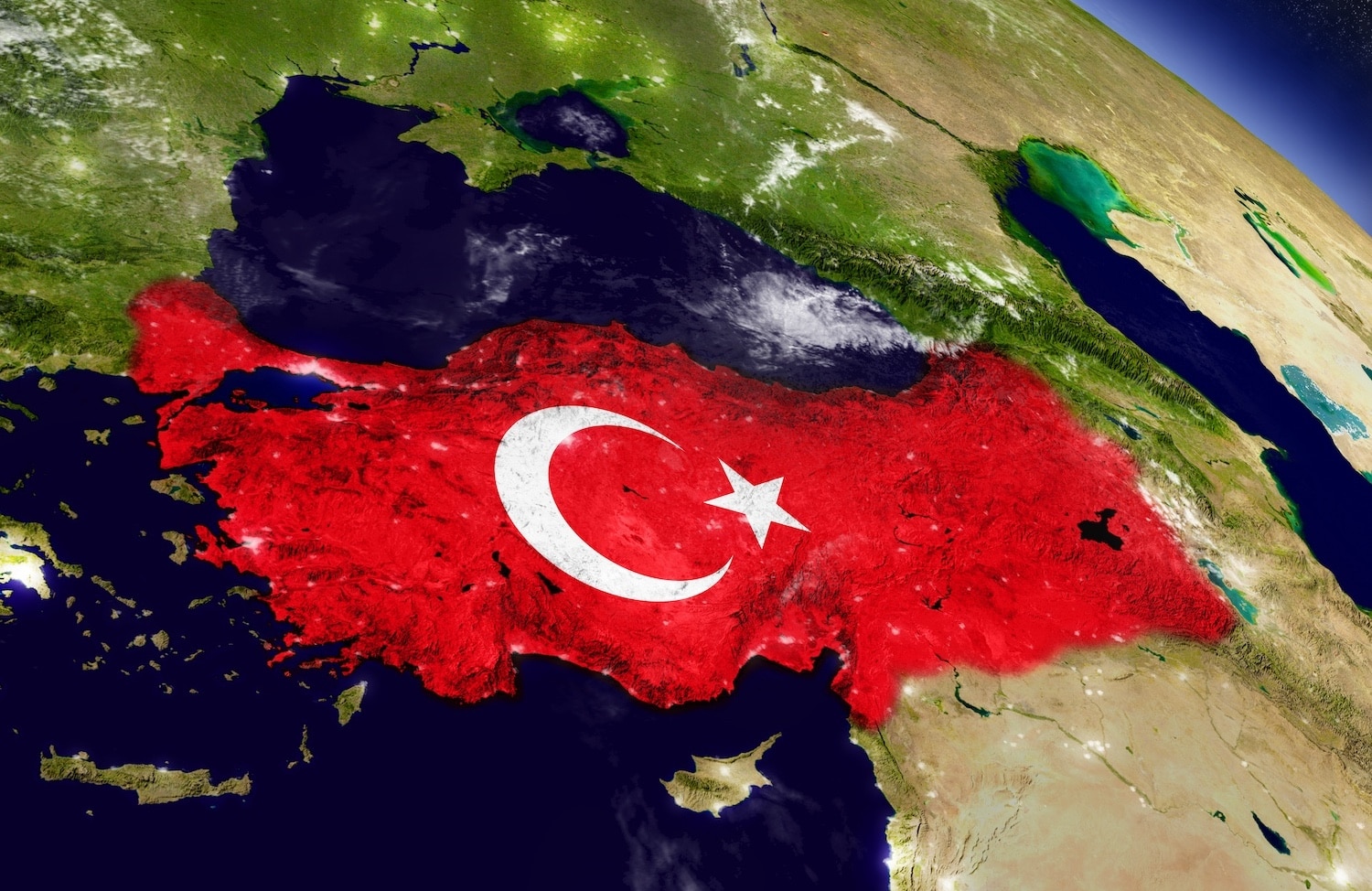
A passport is only part of travel freedom. The airport network behind it also has a major role. This is where Turkey has a clear advantage. Istanbul Airport is one of the world’s leading international hubs, while Turkish Airlines has built one of the widest route networks in global aviation. Recent aviation and investment data highlights the scale of Turkey’s air access:
For citizenship investors, this adds practical value to the Turkish passport. Turkey is not only a country offering citizenship through investment. It is also a country with one of the strongest air-connection platforms between Europe, Asia, the Middle East and Africa.

A balanced view is essential. Turkish passport holders still need visas for the Schengen Area, the United Kingdom, the United States, Canada and Australia. These are the main gaps for many investors.
This does not make the passport weak. It means it should be understood properly. If the main goal is visa-free access to Europe, a Turkish passport is not the same as an EU passport. If the goal is a second citizenship with useful global reach, regional mobility, business access and a real country connection, Turkey can be attractive.
Many Turkish citizens do obtain Schengen, UK, US and Canadian visas. The benefit of a Turkish passport is not that it removes every application. It gives an additional nationality and an additional travel document, which can support wider planning.
One of the strongest business angles is the United States E-2 Treaty Investor visa. Turkey is an E-2 treaty country. This means Turkish citizens can apply for an E-2 visa if they invest in and operate a qualifying US business. Approval is not automatic, and the applicant must meet US immigration rules, but eligibility for the route is valuable.
This is especially useful for citizens of countries that do not have E-2 treaty status. For some investors, Turkish citizenship can create a possible business route to the United States that was not available through their original nationality.
The E-2 is not a green card, and it is not citizenship. It is a renewable non-immigrant visa for eligible treaty investors. For entrepreneurs and business families, that difference is often acceptable because the main need is the ability to live in the US while running a business.

Turkish Citizenship by Investment is the route many foreign buyers use when asking about passport strength.
The real estate route currently requires qualifying property worth at least $400,000, with a three-year no-sale restriction registered on the title deed. Other investment routes include a $500,000 bank deposit, government bonds, fund investment or fixed capital investment, each with its own rules.
The spouse and minor children can usually be included in the same family application. Turkey also recognises multiple citizenship records, although each applicant must check whether their original country allows dual nationality.
Imagine a business owner whose current passport requires visas for most destinations.
They travel often to suppliers in Asia, meet partners in the Balkans, and want a possible E-2 route to the United States. They are not looking for full EU rights. They want a second passport that improves mobility without locking capital into a donation-only programme.
For this person, a Turkish passport can be attractive. It may allow easier trips to Japan, Singapore, Malaysia, the Balkans and Latin America, while creating possible E-2 access if they later invest in a US business.
The right answer still depends on their existing passport, travel history, visa refusals, business plans and family needs.
Now imagine a family that buys a qualifying property in Turkey and uses it as a holiday home or future relocation base.
The passport adds more than travel access. It gives the family a direct legal connection to Turkey, the right to live in the country as citizens, and the ability to pass citizenship to children under the relevant rules.
The family may still need visas for Europe, the UK or the US. But they also gain a second national base in a G20 country with strong air links, a large domestic market and a strategic position between Europe, the Middle East and Asia.
For many families, this is the real value: not only where the passport can fly, but what the citizenship adds to long-term security.

Passport rankings are useful, but they do not tell the full story. A passport with a high ranking may offer broad tourism access but little connection to where the family wants to live, invest or spend time.
Another passport may sit lower in the ranking but offer better practical value for a specific person. For Turkish citizenship, the value can include:
This is why the Turkish passport is often attractive to investors from countries with more restricted mobility.
At James & Aysegul, we help clients think beyond the headline promise of a second passport. For citizenship buyers, the first question is not only whether the Turkish passport is strong. It is whether the property is suitable, whether the documentation can support the application, whether the investment value is accepted, and whether the home is a sensible asset after citizenship is complete.
This includes title deed checks, valuation, DAB records, TTB, payment evidence, three-year no-sale annotation and practical ownership planning.
A Turkish passport can be a valuable result of the investment route, but the property choice still needs to stand on its own. The strongest citizenship plan is one where the buyer gains mobility, a real home or investment, and a clear long-term reason to be connected to Turkey.

The Turkish passport ranks 48th on the latest Henley Passport Index, with access to 113 destinations without a prior visa.
The commonly used Henley figure is 113 destinations without a prior visa. Other trackers may show higher totals if they include e-visas or wider electronic access.
Turkish citizens still need a Schengen visa for most short trips to Schengen countries.
No. Turkish passport holders usually need a UK visa before travel.
No. Turkish citizens need a US visa, but Turkey is an E-2 treaty country, which can be useful for qualifying investors.
Yes, especially for regional travel, Asia, the Balkans, parts of Latin America and possible US E-2 planning.
Yes, if you purchase qualifying real estate worth at least $400,000 and meet the current citizenship requirements.
Turkey records multiple citizenship, but applicants must also check whether their original country allows dual nationality.
Begin your journey with a free consultation.
Get the facts and figures to make informed decisions.
Want to discuss something specific?
Contact us, and we will be happy to help


Randal is a regular contributor to James & Ayşegül’s website and the writer behind The Turkey Diaries. He and his wife moved

Relocating to Bodrum may offer qualifying new residents a way to combine life on Turkey’s Aegean coast with a 20-year Turkish income-tax

Could Turkey’s new 20-year foreign-income exemption apply to your UK private pension? There is a credible argument that it could. Combine...
